Buy the Commute, Not the View: Italy’s Transport Premium
Italy’s investment edge isn’t just beauty: transport upgrades reprice whole micro‑markets. Buy near reduced commute times to convert lifestyle into reliable yield.
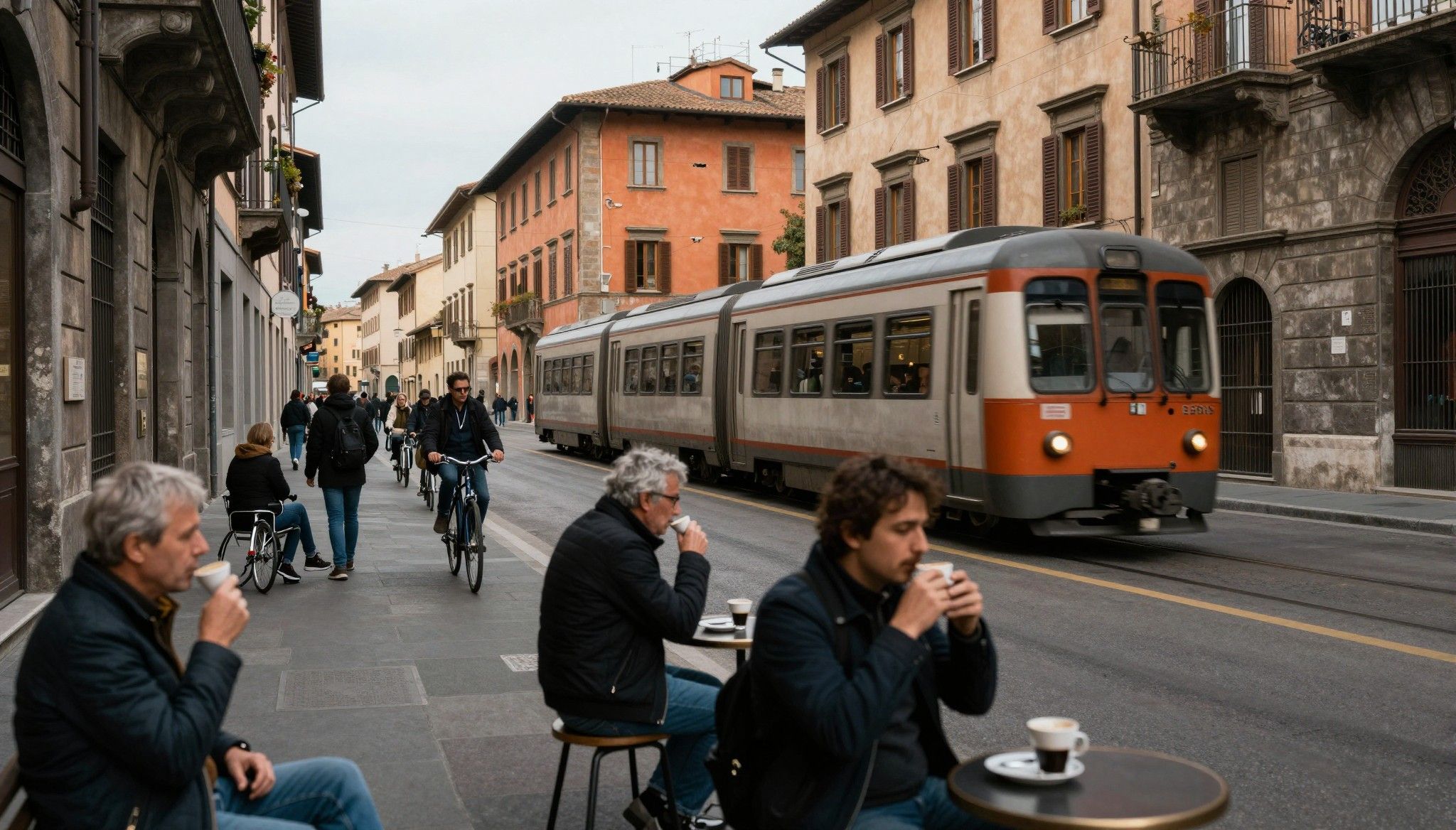
Imagine sipping espresso at 8:30 on a narrow street in Trastevere, then catching a 25‑minute train to a city centre that still hums with neighbourhood life. Italy is a set of lived-in rhythms — market mornings, long lunches, late passeggiatas — and it’s the country’s infrastructure map (rail, regional airports, highways) that turns those rhythms into investable patterns. For overseas buyers the question isn’t whether Italy is beautiful — it is — but which transport corridors will determine price growth and rental demand over the next decade.
Living the Italy lifestyle: neighbourhoods that move you

Italy’s daily life changes by neighbourhood: Milan’s Navigli for design and cafés, Bologna’s Santo Stefano for food markets and student rental demand, Palermo’s Kalsa for low entry-price charm near a recovering port. Transport anchors each rhythm: commuter rail lines expand effective living radius, regional airports make weekend tourism reliable, and new high‑speed links reprice secondary cities by reducing commute times. When a slightly smaller city gets faster rail or more flights, locals call it a convenience; investors call it a re‑rating catalyst.
Spotlight: Milan–Bergamo corridor
Take the Milan–Bergamo axis: Bergamo (Orio al Serio) grew as low‑cost and cargo flights expanded, feeding rental demand in nearby towns and pushing effective price per square metre higher in well‑connected suburbs. Commuter trains and improved roads make 40–50km towns functionally part of Milan’s labour market while retaining lower headline prices. That ‘commute premium’ is measurable: rents increase where travel time to employment centres drops below 60 minutes.
Food, markets and weekend life: where infrastructure meets culture
Markets and cafes define place attachment in Italy; good transport simply makes those pleasures accessible to more people. Regions that combine a strong local food scene with reliable rail/road links — Emilia‑Romagna, Veneto, parts of Tuscany — capture longer visitor stays and higher weekday short‑let occupancy. That dynamic alters seasonal income profiles: stable year‑round demand supports higher long‑let yields, while isolated coastal towns depend heavily on summer peaks.
- Living highlights tied to connectivity: • Morning market at Mercato Centrale (Florence) then a 1‑hour drive to Chianti vineyards • Aperitivo along Naviglio Grande with 20‑minute tram access to central offices • Weekend trips from Naples to Amalfi using improved regional ferries and local rail • Day‑commuting from Padua into Venice with faster regional services • Access to international flights from secondary airports (Bergamo, Bologna, Naples)
Making the move: practical considerations that preserve yield

Lifestyle attractions sell emotional value; infrastructure determines whether that value becomes steady cash flow. Look for towns where travel‑time improvements are funded and scheduled — not promised — and where local planning supports denser, rental‑friendly housing near stations. Recent EU and PNRR‑backed projects (eg. Naples–Bari, Brenner Base Tunnel) materially shorten journeys and change regional supply/demand balance, which translates into predictable re‑rating windows for investors.
Property types that suit the connected buyer
Buyers focused on connectivity prioritize compact, well‑located units: two‑bed flats near stations for short‑term visitors, three‑bed family apartments for long‑let commuters, and small historic conversions that command premium per‑square‑metre prices near transport hubs. New build developments near tram/light rail stops offer lower maintenance and clearer rental rules; historic cores often have regulatory short‑let limits that reduce revenue volatility but can also cap upside.
How local experts turn lifestyle into yield
A local agency that understands train timetables, municipal zoning around stations, and short‑let licensing reduces acquisition risk. Good agents supply walk‑time maps, tenant type breakdowns, and pro forma yields that reflect local taxes and permitted tourist‑let days. Where cities limit short‑term listings (Venice, parts of Florence), agencies that can source permitted long‑let stock or negotiate flexible lease terms unlock steady yields.
- Steps to match lifestyle with an investable property: 1. Map 30/45/60‑minute isochrones from target stations and airports and shortlist micro‑markets. 2. Obtain historical rent and occupancy data for both long and short lets (3‑5 year series). 3. Confirm planned infrastructure schedules (public documents) and cross‑check budgets. 4. Model net yield using local tax treatment, management fees and conservative vacancy (6–12%). 5. Negotiate purchase conditional on a technical survey and permit checks.
Insider knowledge: what expats wish they’d known
Expat owners often discover that charm and rules collide: central historic apartments can be subject to short‑let caps, while well‑connected suburbs attract stable local tenants but fewer holiday premiums. Seasonality isn’t binary — transport investment smooths peaks by enabling more business travel and shoulder‑season visits. The smart move is owning a mix: one core long‑let in a commuter town plus one short‑let near a transport and tourist node.
Cultural and practical integration
Language and community matter: a property near a thriving neighbourhood association or local mercato increases tenant retention and reduces management churn. Practicalities — heating systems, condominium rules (condominio), and historical building constraints — are negotiated locally. Rely on agencies that maintain local trades networks; they are often the difference between a straightforward renovation and months of permit delays.
Long‑term view: where Italy’s connectivity will create winners
Winners will be secondary cities made first‑tier by faster travel: Brindisi/Naples corridor, sections of the Adriatic line (Naples–Bari), and Alpine gateways improved by the Brenner Base Tunnel. Expect 3–8% re‑rating over medium term where travel time falls materially; plan for policy risk and local planning constraints when forecasting price appreciation. Infrastructure reduces idiosyncratic market risk by broadening the tenant pool.
- Red flags to watch before you buy: • Announced infrastructure without approved funding or realistic timelines • Towns with day‑trip tourism but no year‑round transport links • Historic centre flats with unresolvable accessibility or heating issues • Municipal caps on short‑lets that remove flexibility from yield models
Conclusion: buy the commute, not the view. Italy sells a romance of piazzas and sunsets; seasoned investors buy proximity to what actually moves people — trains, regional flights, ports — and use hyperlocal data to convert charm into reliable yield. Start with a transport‑anchored shortlist, validate with local rental data, and work with an agency that speaks timetables as fluently as listings.
Danish relocation specialist who moved to Cyprus in 2018, helping Nordic clients diversify with rental yields and residency considerations.