When the Aegean Sells the Dream — Where Yields Hide in Greece
Greece’s postcard appeal masks regulatory and tax details — model transfer tax, ENFIA and seasonality to find reliable inland yields and avoid mobility-driven overpaying.
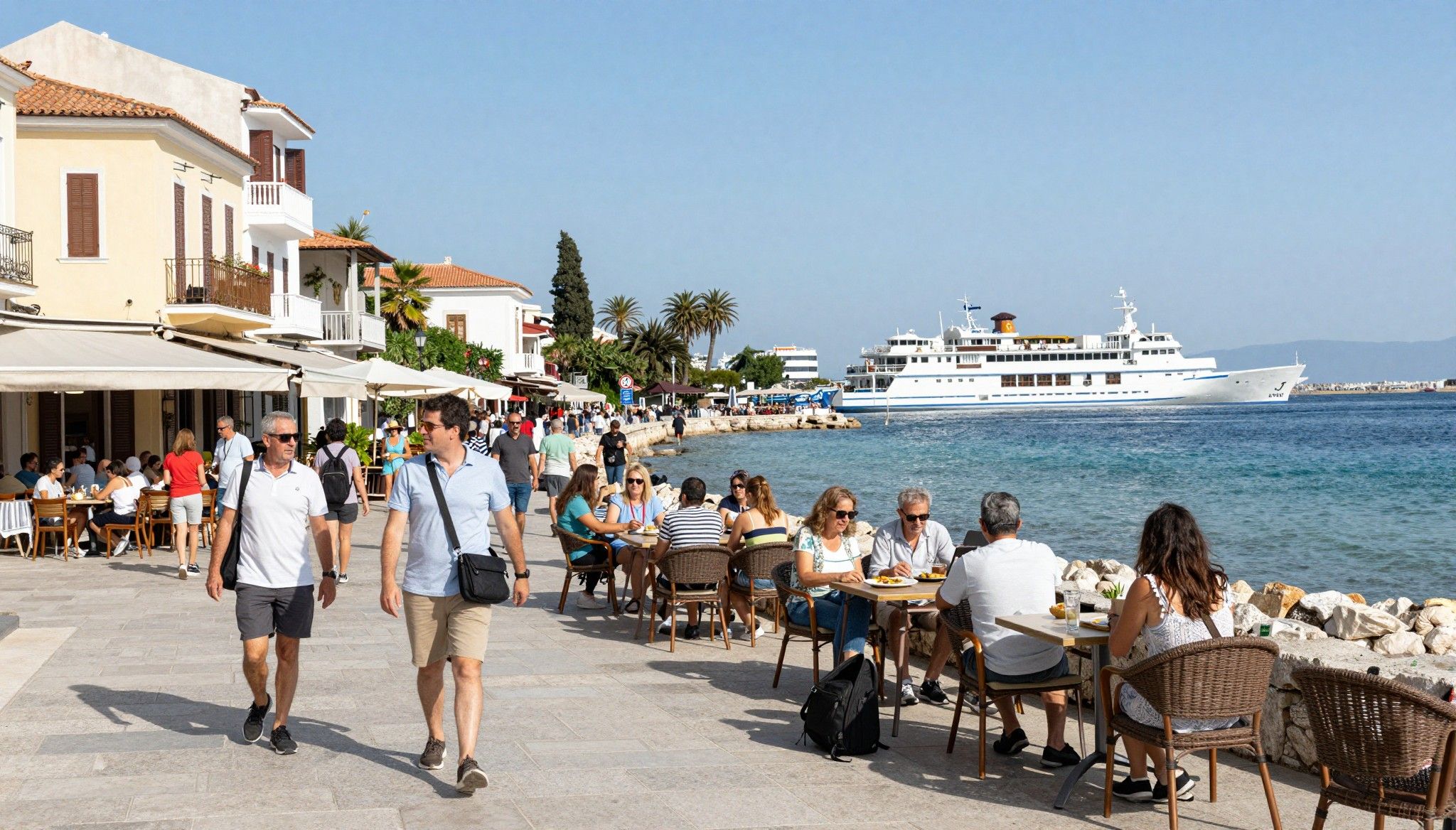
Imagine sitting at a tiny marble table in Exarchia, espresso steaming, while the tram clacks toward Syntagma and a landlord two doors down adverts a seafront apartment on Mykonos. Greece sells itself with sun and sea, but beneath that postcard surface are regulatory contours that reshape returns: transfer tax, ENFIA, residency rules and targeted incentives that make inland towns surprisingly efficient for yield-first buyers. This piece pairs the lived-in Greece — markets, cafés, markets at dawn — with the hard figures international buyers need to assess total cost of ownership and long-term net yield.
Living the Greece lifestyle — more than sand and sunset

Greece is a rhythm set by markets at dawn, kafeneia at noon and tavernas after dark. Athens districts like Koukaki hum with local life — street markets, small bakeries and narrow apartment blocks where owners rent to students and young professionals. On islands such as Naxos or Paros, mornings are fish markets and afternoons are wind-surfers; Santorini and Mykonos bring crowds and price spikes that distort yield math. If you want steady rental income, think of rental season length, transport links and year-round community life — not just the sparkle of an island postcard.
Athens: city rhythms, short-term demand and steady long-term tenants
Walkable neighborhoods — Exarchia, Koukaki, Pangrati — offer small apartments that command year-round demand from locals, students and professionals. These areas combine walking access to metro lines, boutique cafés and coworking spots, which makes them attractive for mid-term rentals (3–12 months) and reduces vacancy risk. Expect lower headline prices per square metre than central London or Barcelona, but tighter gross yields once ENFIA and management costs are included.
Islands vs. Mainland: the seasonal premium and when it hurts returns
Islands such as Mykonos and Santorini offer outsized short-term rents in high season, but those spikes compress effective annual yields unless you can operate professionally and accept long off-season vacancies. Smaller islands with active local economies (Naxos, Paros) provide a middle ground: tourist income plus local year-round rents. For yield-focused buyers, inland provincial towns with reliable year-round demand often beat headline island yields after taxes, insurance and property management are accounted for.
- Athens neighbourhoods, island contrasts and lifestyle highlights:
- Koukaki — cafés, short walks to Acropolis; reliable long-term tenant base.
- Naxos/Paros — mixed-season economies with local services that support longer letting windows.
- Mykonos/Santorini — headline rents, high operating and regulatory scrutiny, seasonal vacancy risk.
Making the move: the tax and regulatory anatomy that reshapes returns

Three practical tax items change the headline price into a total cost of ownership: the transfer tax payable on purchase, the annual ENFIA holding tax, and income tax on rental receipts. Transfer tax is charged to buyers; recent official guidance lists the standard rate at approximately 3% of the taxable value, which buyers should model into acquisition costs. ENFIA — the unified property tax — is assessed annually and varies with zone, surface and characteristics; recent updates include insurance-linked reductions for primary residences. Model these into net yields rather than ignoring them.
The non-domicile (non-dom) flat-tax option and residency-by-investment rules change the calculus for high-net-worth buyers. Greece’s optional non-dom regime offers a lump-sum tax on foreign income for qualifying individuals; it can be attractive for buyers whose income is largely offshore. Simultaneously, Greece’s residency-by-investment thresholds were reformed to higher tiers in recent years, meaning you should confirm current zone thresholds before buying to chase mobility rather than yield.
How to fold taxes into your yield model (step-by-step)
- Estimate gross rent: use conservative occupancy (35–50% for islands; 70–85% for Athens year-round).
- Subtract operating costs (management, maintenance, utilities during vacancy) — typically 20–30% of gross on short-term models.
- Subtract annual ENFIA and local municipal taxes; add insurance and emergency capex reserve (5–10% of rent).
- Apply income tax on net rental income according to current progressive brackets; if using non-dom options, model the fixed regime against expected foreign income.
Insider knowledge: cultural rules, red flags and where to find overlooked yield
Local custom matters. Sellers in Greece often price seafront views as a single binary premium — but local tenants prioritise accessibility (bus links, grocery, doctors) and heating/cooling efficiency. Expat owners we interviewed say the common mistake is buying the view and ignoring sound-proofing, insulation and legal title clarity. Insist on full cadastral (title) checks and recent energy performance certificates; these small items materially affect running costs and tenant pools.
Red flags to watch during due diligence
- Unclear land registry entries or overlapping rights — get a Greek notary and lawyer to certify title.
- Properties marketed for short-term rental without permits — local rules on short lets vary and enforcement can change rapidly.
- Under-insulated buildings that look charming but have high seasonal energy costs and low winter tenancy appeal.
Where yields hide: three contrarian pockets
- Regional university towns (Ioannina, Rethymno) — steady student demand, modest prices, predictable turnovers.
- Transport corridors near Thessaloniki and Patras — commuter rentals with lower seasonality and growing local economies.
If mobility matters, model residency thresholds independently of yield. Recent reforms raised minimum investment thresholds in primary tourist spots; that changes where foreign capital flows and can push buyers inland where the same capital buys multiple income-generating units. Use official guidance when calculating whether you’re buying mobility or yield — the two often conflict.
Working with local advisors without losing analytical control
Choose an agency that provides data: historical occupancy, realistic comparable rents, recent sales by street and official tax assessments. Ask for raw numbers — previous years' P&L from a comparable unit, recent ENFIA bills, and utility averages. Pair that with a bilingual lawyer for title and permitting checks so you can trust the arithmetic behind the listing price. Avoid agents who refuse to show official paperwork; the numbers are the proof.
Six practical next steps before you bid
- 1) Pull the cadastral extract and confirm zoning; reject properties with unresolved cadastral issues.
- 2) Request three years of operating data (if short-term) or a sample tenancy ledger (if long-term).
- 3) Model net yield using conservative occupancy and include 3% transfer tax + ENFIA and insurance.
- 4) Check Golden Visa/non-dom eligibility separately to avoid overpaying for mobility you don’t need.
- 5) Negotiate repair credits and require an independent survey on insulation and building services.
- 6) Use local property management proposals to stress-test cashflow assumptions for 12 months.
Conclusion: Greece is both a romance and a spreadsheet. The sunshine and marketable lifestyle are real — but so are transfer taxes, ENFIA, and the structural seasonality that compresses returns on headline figures. If you treat Greek property as an income asset, favour neighbourhoods with year-round demand, insist on clean title and verifiable operating data, and model taxes explicitly. Do that, and Greece becomes not just somewhere to dream about, but a place to add measured, diversified yield to a portfolio.
Swedish financier who guided 150+ families to Spanish title deeds since relocating from Stockholm in 2012, focusing on legal and tax implications.