Italy’s Ownership Myths: How Taxes Don’t Kill Returns
Italy’s tax rules look punitive until you model cadastral values, cedolare secca and IMU — do that and lifestyle markets become predictable, investable returns.
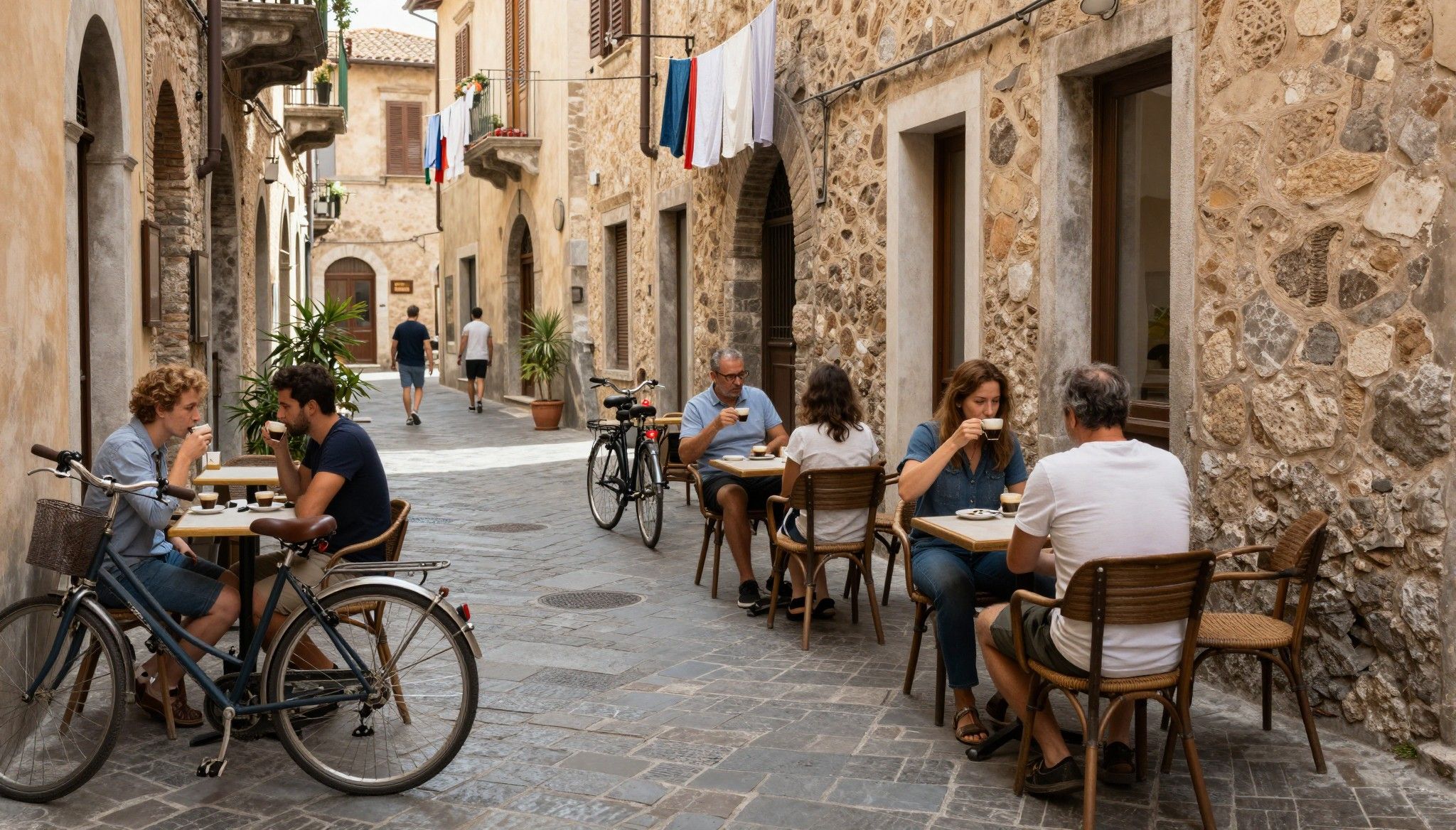
Imagine sipping an espresso at Bar Basso in Milan at 9am, then catching a late-afternoon train to a Ligurian fishing village — Italy feels designed around ritual, food and short distances. That daily rhythm shapes property choices more than headline tax rates, and it’s why international buyers often misread the country as a tax‑heavy, ownership‑hostile market when the reality is more nuanced. Recent market data shows price and demand patterns that reward location, tenure and tax strategy rather than scaring buyers off. (Sources below.)
Living the Italy lifestyle — and why it matters for returns

Italy is a patchwork: compact historic centres, commuter suburbs, sunlit coasts and agricultural inland towns. Each setting produces different rental demand — short‑stay tourists in Amalfi, long‑term tenants in Bologna’s university wards, digital nomads in Palermo’s growing coworking scene. For investors, lifestyle equals cash flow: places where daily life supports year‑round occupancy outperform postcard markets that peak for six weeks a year.
Neighborhood spotlight: Trastevere (Rome) vs. Navigli (Milan)
Trastevere’s cobbled lanes and evening trattorie attract lifestyle long‑stays — ideal for furnished mid‑term rentals to professionals and cultural tourists. Navigli’s canal-side bars drive weekend demand and premium short lets but also seasonal vacancy. Choose Trastevere‑type micro‑markets when you prioritise stable yields; choose Navigli‑type when you want higher peak rates and accept off‑season risk.
Food, markets and seasons: how daily life shapes occupancy
Seasonal rhythms that affect occupancy and pricing
- Morning market rituals (e.g., Mercato Centrale, Florence) that sustain daily renters and Serviced‑apartment demand
- Coastal festival weeks that lift short‑let rates but leave long gaps off‑season — crucial when modelling net yields. (See ISTAT data on quarterly price shifts.)
Making the move: regulatory realities that actually help investors

Once the lifestyle decision is made, the legal and fiscal framework sets the true after‑tax return. Italy’s system has predictable transfer taxes, municipal IMU for second homes, and an optional flat tax on rental income called cedolare secca that can simplify calculations. Those rules are structured and codified; they reward deliberate structuring rather than panicked pricing assumptions. Use local regimes to convert a headline tax burden into a manageable cost line on your P&L.
How purchase taxes change your math
- 1) Primary residence buyers commonly pay a 2% registration tax on cadastral value (not market price), plus modest fixed fees — this materially lowers entry costs for owner‑occupiers compared with headline market prices.
- 2) Buying from a developer usually triggers VAT (10% typical for ordinary housing) and different fixed registration fees — model both purchase routes to see which preserves net yield.
- 3) Cedolare secca (flat tax on rental income) can simplify returns — using a fixed rate for qualifying tenancy types makes cashflow modelling cleaner and in many cases improves net yield versus progressive income tax.
Insider knowledge: rules, customs and red flags expats miss
Expat buyers often stumble on three practical realities: cadastral values drive transfer tax calculations, not market price; municipal IMU rates differ wildly and can erase small yields; and local tenancy customs affect vacancy timing. These are not surprises if you plan for them — they are variables to model in your expected internal rate of return (IRR).
Cultural nuance: why ‘quiet negotiations’ matter
In many Italian towns agents and sellers prefer off‑market negotiations and dossier‑led sales. That means patient buyers who work with a trusted local advisor often access better pricing and clearer knowledge about building issues (e.g., seismic certificates, historic‑building constraints). Treat local agencies as strategic partners, not just listing sources.
Red flags and immediate checks
- • Confirm cadastral class and rendita catastale — transfer taxes and future IMU hinge on it.
- • Check building compliance and certificazioni (energy, seismic) before exchange to avoid surprise remediation costs.
- • Model IMU and municipal surtaxes explicitly in your cashflow — two adjacent towns can have very different rates.
Practical next steps — a 5‑point action plan for serious buyers
- 1) Start with lifestyle filters (commute, markets, seasonality) to choose the right micro‑market, then build your tax model for that micro‑market.
- 2) Obtain the rendita catastale and local IMU schedule from the municipality and model three vacancy scenarios (5%, 15%, 40%).
- 3) Compare buying routes (private resale vs. developer) and run after‑tax IRR including transfer taxes, notaio fees and likely renovation costs.
- 4) Decide early whether you’ll elect cedolare secca for rents — it simplifies forecasting and can be tax‑efficient for furnished and medium‑term lets.
- 5) Engage a bilingual notary and a local tax advisor before exchange; small wording differences in contracts change who bears renovation liabilities.
Final note: data, not drama
National statistics show directional price shifts and local divergence; Italy’s mix of predictable taxes and variable municipal rules rewards buyers who run granular scenarios. Rely on primary data (ISTAT, Agenzia delle Entrate) and local specialists to convert Italian lifestyle into repeatable, defendable returns.
If you love the idea of walking to a market at dawn, owning an apartment in a historic centre can be both personally rich and financially sensible — provided you model taxes, IMU and vacancy properly, and use cedolare secca where appropriate. Next step: pick a micro‑market, run a three‑scenario cashflow and ask a local notary for the rendita catastale — that single figure changes the deal more than any brochure photo.
Danish relocation specialist who moved to Cyprus in 2018, helping Nordic clients diversify with rental yields and residency considerations.