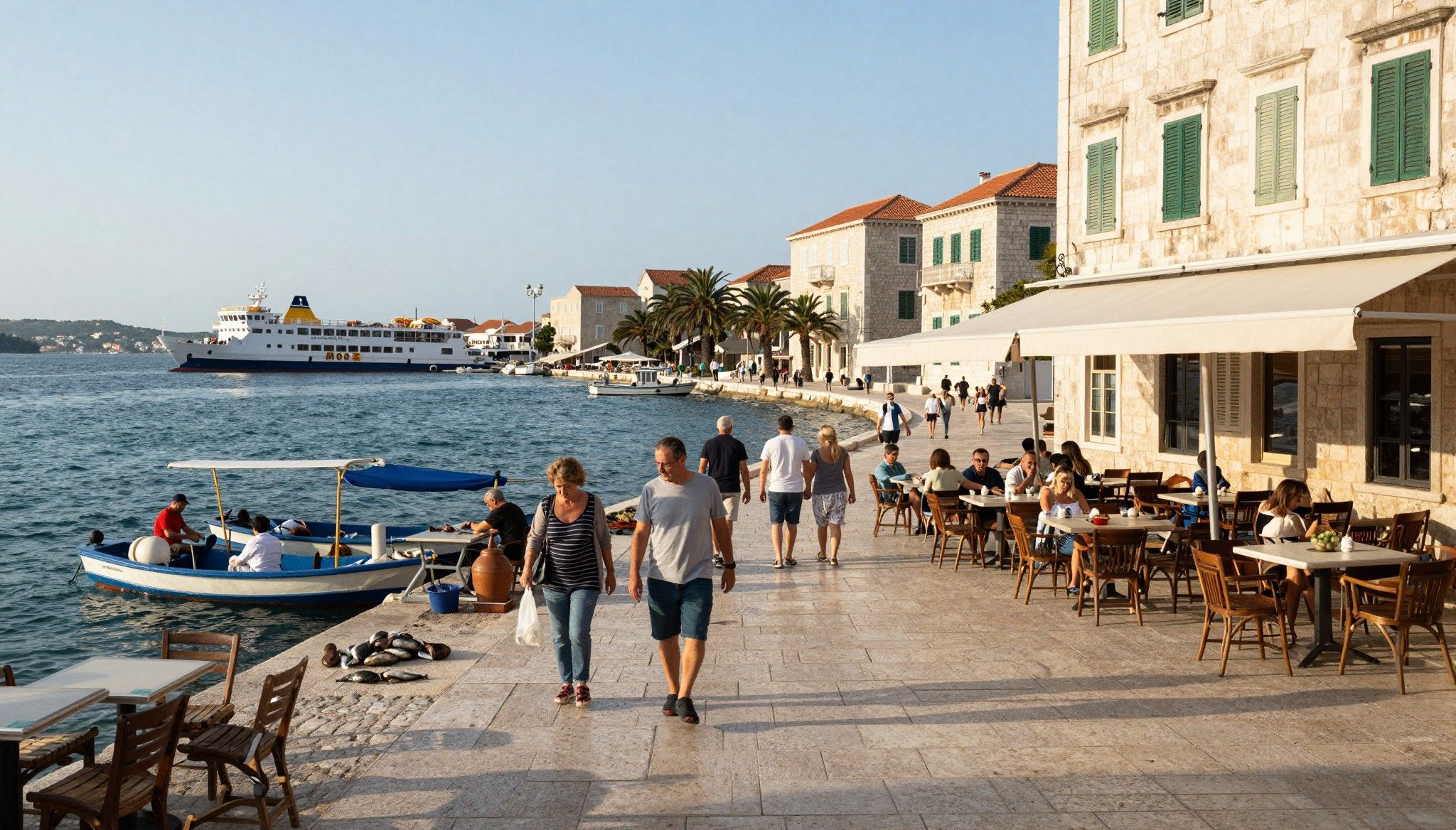
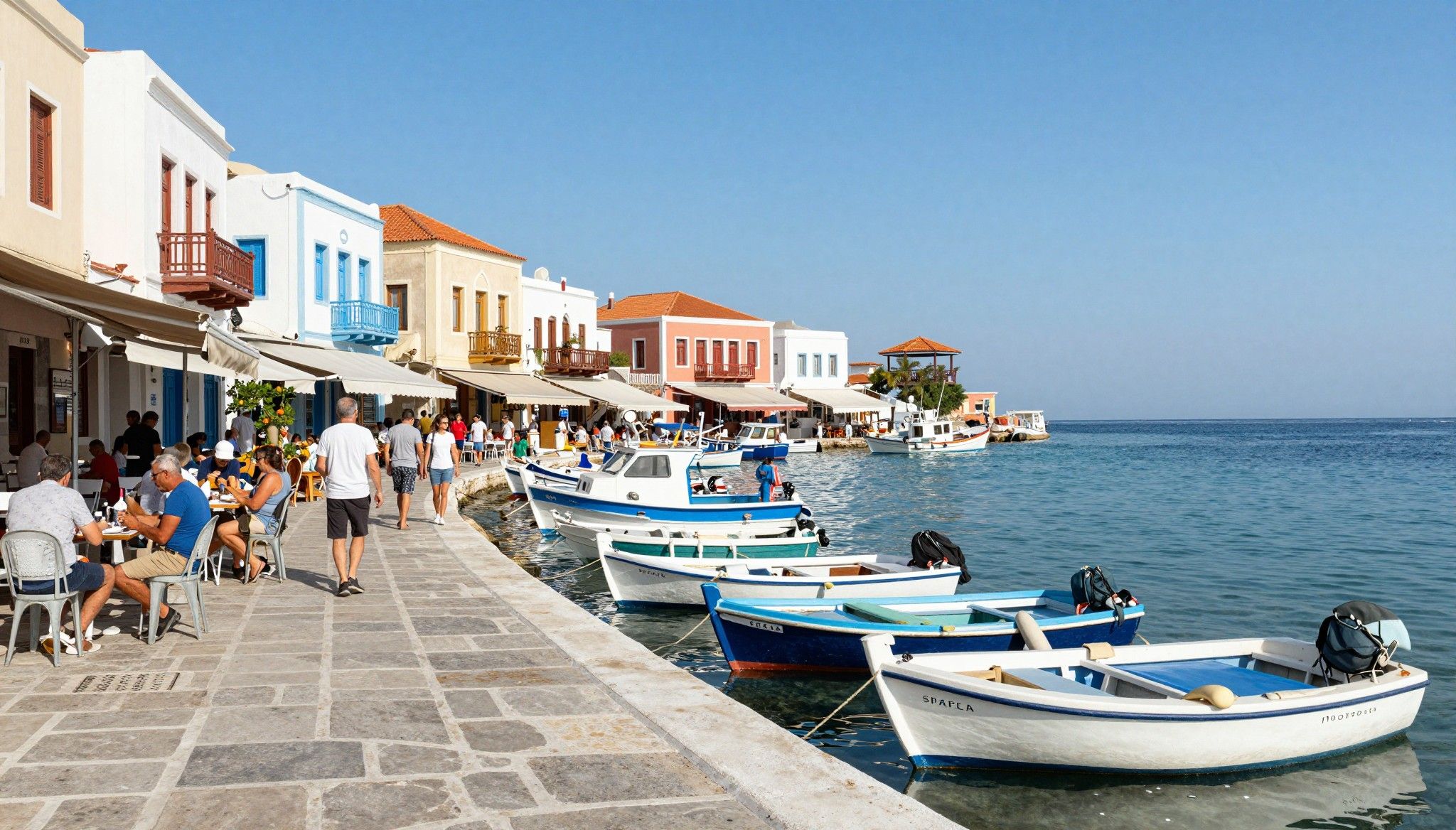
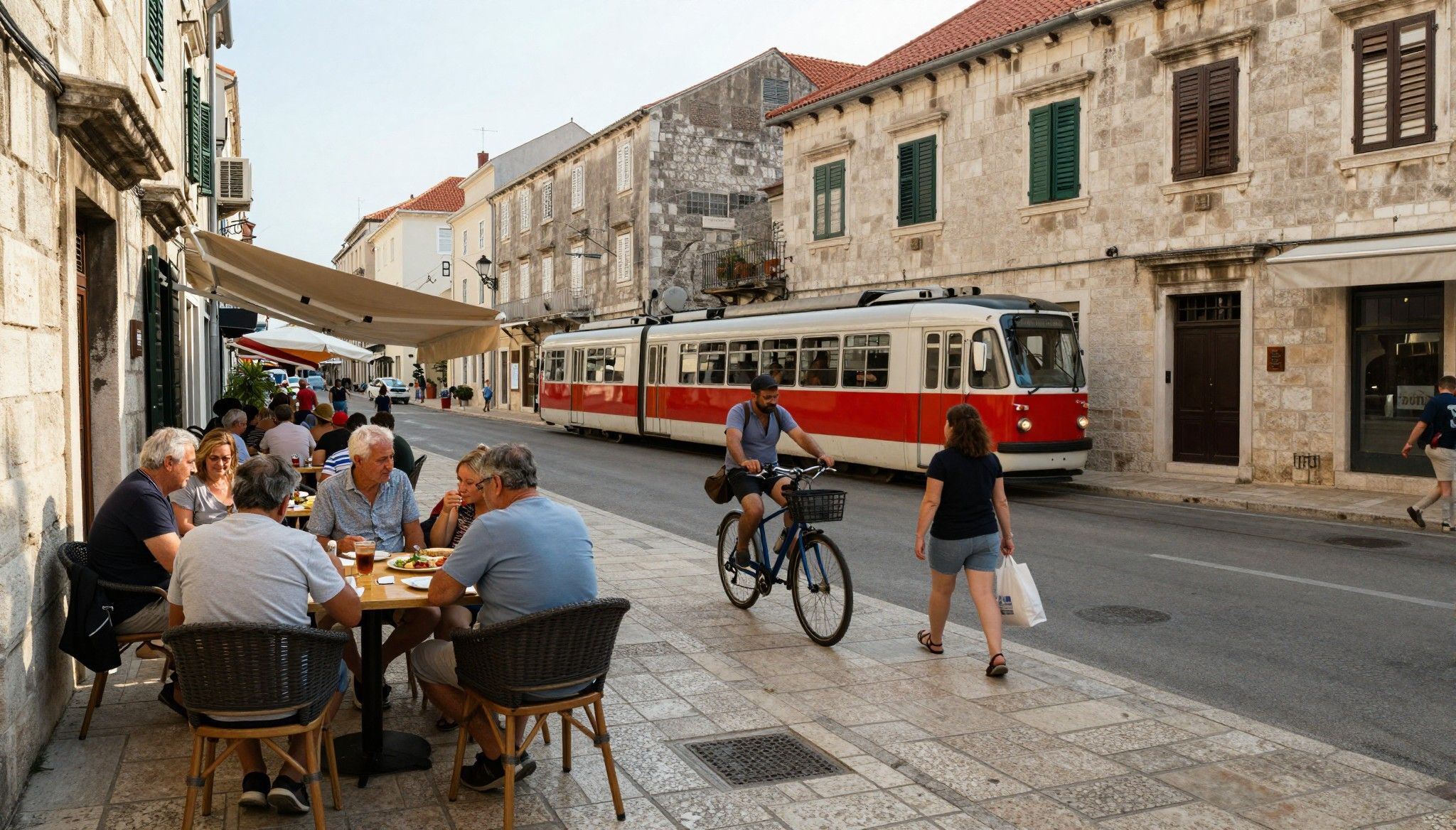
The Greek Neighbourhood Investors Skip (But Shouldn't)
Look beyond island glamour: neighbourhoods Greeks live in offer steadier occupancy, lower prices and better net yields — underwrite with local data and partners.

Imagine sipping a strong coffee outside a kafeneio on Kypseli’s main street, then walking five minutes to discover a rental-ready apartment whose price per square metre still lags behind coastal Attica. That contrast — lived-in neighbourhoods with real rental demand and muted price growth — is where data-savvy buyers find overlooked returns in Greece.
Living the Greek rhythm: neighbourhoods that feel like home

Daily life in Greece is defined by short walks to markets, late‑morning cafés, and summers that push city life to the coast. Tourist flows (up modestly in recent years) concentrate on islands and the South Aegean, but high‑occupancy months are concentrated July–October, leaving large parts of the year with steady local demand rather than tourist spikes. Understanding that split changes where you target purchases.
Kypseli, Exarchia, Neos Kosmos: city pockets locals love
Walkable blocks in Athens — Kypseli’s terrace cafés, Exarchia’s bookshops, Neos Kosmos’ new metroside developments — are home to steady long‑term rentals: students, young professionals and public‑sector workers. Rents here don’t spike with tourism; occupancy is stabilised by year‑round local demand, which underwrites predictable net yields for buy‑to‑let strategies.
Chania, Patras, Volos: secondary cities with hidden appeal
Regional hubs like Chania, Patras and Volos combine local university populations, port activity and limited short‑term letting pressure. House price indices show steady growth nationally (Q2 2025 +4.8% y/y), but regional dispersion means price per sqm in secondary cities remains materially below Athens and island hotspots — creating room for outsize yield after expenses.
Making the move: practical considerations that protect returns

Tourism remains a major macro driver — travel receipts were €18.8bn in 2024 — but inflows are concentrated. Treat Greece as a two‑track market: tourist‑driven islands (volatile seasonality) and resident‑driven neighbourhoods (lower volatility). Your underwriting must reflect which track your property sits on.
Property types that fit the neighbourhood strategy
Choose properties aligned with local demand: compact two‑beds near universities or metros for steady mid‑term lets; modest, well‑insulated apartments in older blocks for long‑term rentals; renovated townhouses in port cities for mixed income (long‑term tenants plus occasional charters). Avoid over‑seeking sea views in city markets — you pay a premium without consistent year‑round rent uplift.
Local experts also help you manage regulatory shifts. Recent changes to the investment residency thresholds (introduced in 2024) raised minimums in prime zones, which compressed some investor demand into secondary cities. That regulatory re‑pricing created pockets where yields improved as buyer competition softened.
- Checklist: how to underwrite a Greek neighbourhood purchase
- Estimate net yield using conservative occupancy (65–75% for tourist‑adjacent; 85–95% for resident districts).
- Validate price per sqm against municipal records and multiple listings — secondary cities often show 20–40% discount vs. Athens.
- Factor in energy upgrades and insulation: Greek winter heating and summer cooling affect operating costs materially.
Insider knowledge: expat realities and long‑term lifestyle trade‑offs
Expats land in neighbourhoods that match their rhythm. Families often choose suburban Athinon or Kifisia for schools and parks; digital nomads cluster near central Athens and Thessaloniki’s cafes with reliable fibre. But integration goes beyond property: language, local bureaucracy and seasonal migration patterns shape occupancy and resale timing.
Cultural cues that change investment outcomes
Small customs matter: neighbourhoods coalesce around weekly markets, Orthodox feast days and local festivals — those events drive short rental demand and create predictable peak weeks you can monetise without overexposing to short‑stay volatility.
How life changes after you buy
Owning in a lived‑in quarter means slower capital appreciation than an island boutique address but steadier cash flow. You trade headline capital gains for lower vacancy, easier property management, and a tenant mix that reduces wear and churn.
- Steps to secure a neighbourhood‑first investment in Greece
- 1) Map demand: compile local rental listings, municipal demographic data and transport links.
- 2) Underwrite conservatively: use local occupancy, include maintenance reserve (3–5% of asset value), and stress yields at +200 bps costs.
- 3) Retain a neighbourhood consultant: local agents who know school catchments, tenancy norms and municipal plans.
- 4) Close with operational partners: a property manager, accountant and lawyer experienced in Greek tax/energy efficiency grants.
Red flags local buyers ignore
- Large occupancy swings between July–October and the rest of the year; if a property’s rent relies on those weeks alone, cash flow will be lumpy.
- Properties with complicated legal titles (unresolved building permits) — common in older neighbourhood stock — that delay rentals or sales.
- Unrealistic net yields quoted without accounting for VAT, municipal property taxes and energy retrofits.
Conclusion: If you want Greek life that feels authentic and investment returns that behave, start by looking where locals live. Secondary cities and inner‑city neighbourhoods offer steadier occupancy, lower acquisition multiples and operational simplicity. Bring data (local occupancy, price‑per‑sqm, municipal plans) to every viewing, and pair an on‑the‑ground agency with a legal and tax adviser to lock in predictable yield. That’s how the dream becomes an investment that actually pays.
Dutch investment strategist who built a practice assisting 200+ Dutch clients find Spanish assets, with emphasis on cap rates and due diligence.