Croatia: Scenario Tests That Protect Coastal Returns
Croatia’s expanding shoulder seasons and tax shifts reshape returns—pair the country’s lived‑in coastal and city rhythms with scenario‑based sensitivity testing to protect yields.

Imagine sipping a ristretto at a sun-warmed café on Zagreb’s Tkalčićeva, then hopping a bus to a pebble cove near Split by late afternoon. That day-to-day—espresso culture, short ferry hops, late dinners—shapes the practical choices investors must make in Croatia. Recent market analysis shows tourism and short‑term demand are extending into shoulder seasons, but supply dynamics and proposed tax reforms change expected returns. This guide pairs that lived-in view of Croatia with scenario-based risk and sensitivity analysis so you can weigh lifestyle against net yield.
Living the Croatia life: what you actually wake up to

Croatia is no postcard frozen in July; recent statistics show growth in pre- and post-season demand and rising visitor numbers overall. That means many coastal towns now pulse beyond summer: morning markets in Rovinj, weekend concerts in Zadar, and increased weekday occupancy in Split. For buyers, this livability outside the high season can stabilise rental income, but it also introduces variability in occupancy and pricing between districts—important when stress-testing cashflows.
Zagreb to Dalmatia: neighbourhoods that define daily life
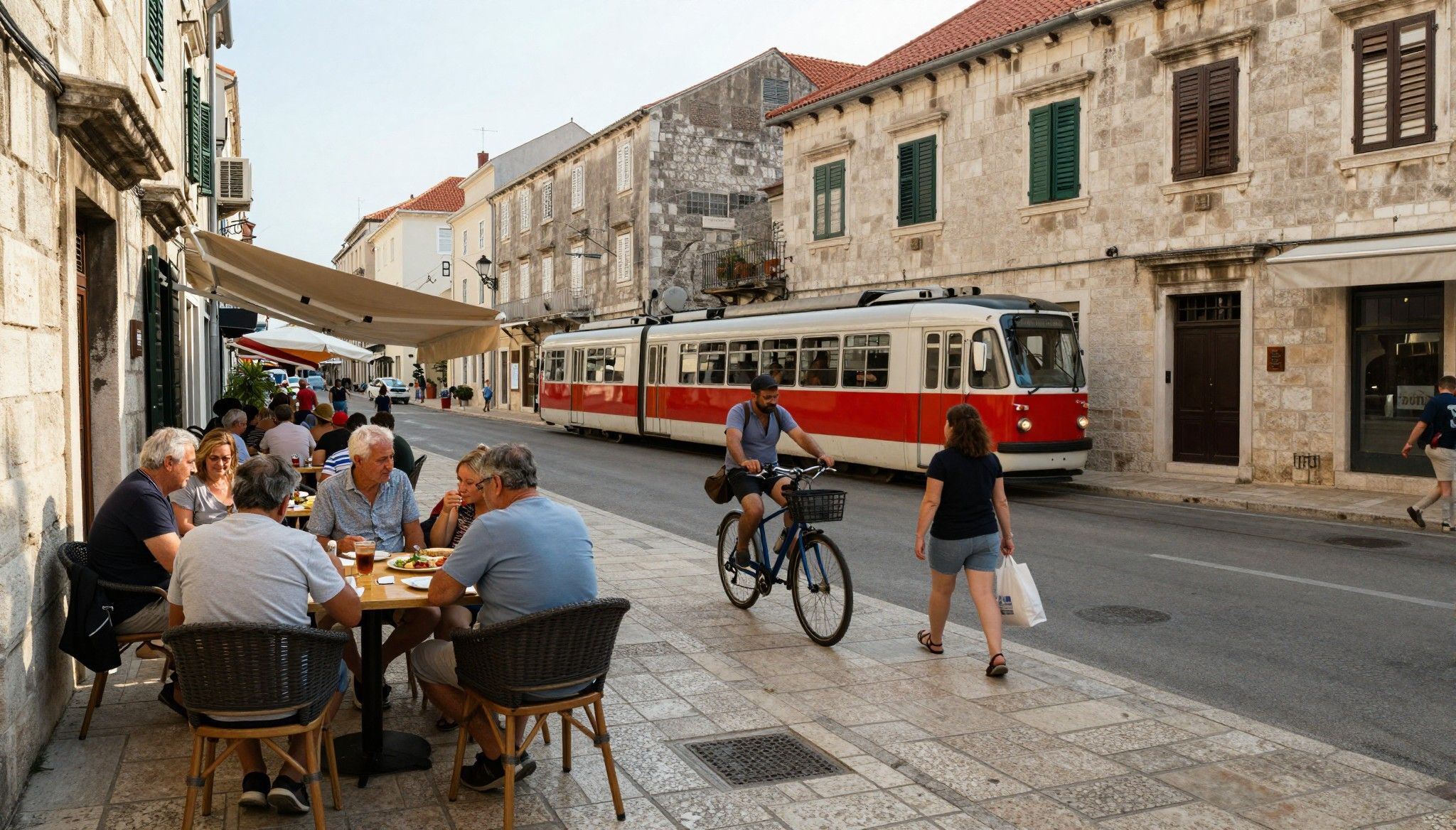
Zagreb’s Upper Town and Tkalčićeva deliver café density, coworking options, and steady long‑let demand from students and professionals—attributes that mute seasonality. On the coast, Split’s historic Diocletian area and the coastal promenade offer high short‑let yields but spike vacancy risk in winter. Islands like Hvar and Brač deliver premium summer rates; inland counties such as Slavonia provide affordability but slower capital growth. Which micromarket you choose should reflect intended tenancy (long‑let vs short‑let) and tolerance for seasonality.
Food, ritual and rhythm: markets, menus and weekend life
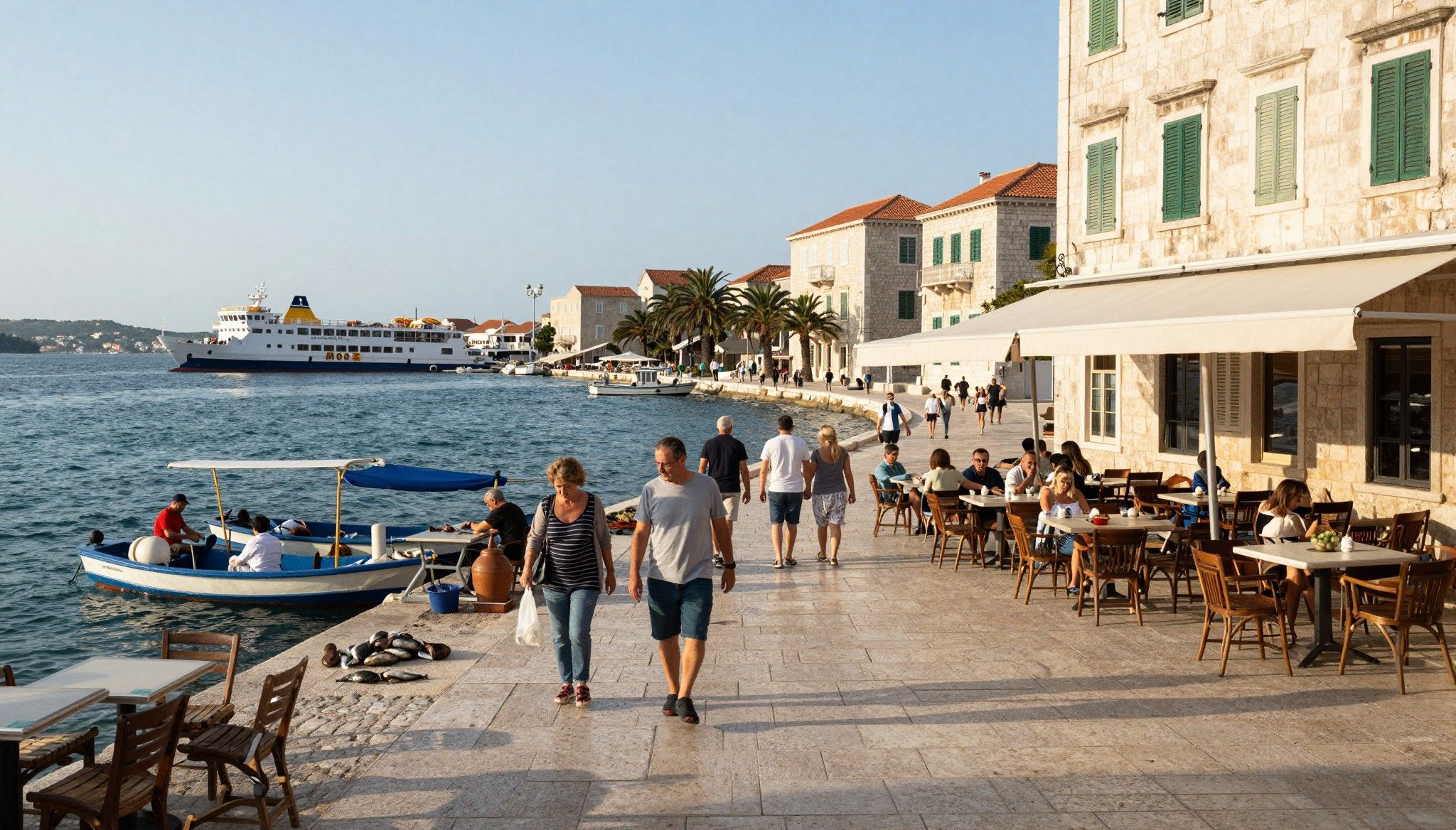
Picture weekend markets in Dolac (Zagreb) or Pazar (Split), fishermen off‑loading catch at Riva at dawn, and family dinners stretching late into summer nights—these routines create tenant expectations: compact kitchens, good ventilation, storage for bicycles and water toys. Properties that match local rhythms—stone façades with insulated windows, shady terraces, and secure storage—rent faster and command higher net yields than equally priced but poorly adapted units.
- Lifestyle highlights that affect property demand
- Dolac Market (Zagreb) – daily life and long‑let demand driver
- Split Riva & Diocletian’s Palace – premium short‑let pricing, high seasonality
- Zadar promenade & Sea Organ – growing shoulder‑season cultural draw
Making the move: practical considerations and risk levers

Lifestyle motivates the purchase; fiscal and regulatory changes determine the net return. Croatia’s proposed property tax and recent policy signals aim to discourage short‑term stockpiling of housing and encourage long‑lets. That policy direction is a primary risk variable when modelling net yields: an increase in property taxation or incentives for long‑term leasing materially shifts projected IRR in coastal short‑let strategies.
Property types and how they change risk profiles
Stone apartments in historic centres deliver high headline rates but require restoration capex and face stricter planning rules; modern builds near transport and coworking hubs attract multi‑month tenants. Asking prices rose sharply recently—coastal counties such as Istria and Dubrovnik show the steepest per‑m² premiums—so consider refurbishment budgets and permitted uses when stress‑testing returns. Net yield sensitivity to capex and vacancy is greatest in heritage listings.
How local experts change the outcome
- Local agency and legal team checklist
- 1) Verified agency with island/coast experience — negotiates seasonal pricing and understands marina/nautical charters.
- 2) Local attorney for due diligence — title checks, zoning for short‑lets, and inheritance rules (Croatian succession law can affect transfer).
- 3) Property manager who reports monthly occupancy and handles utility transitions; long‑term portfolios need someone who converts short‑let demand into reliable off‑season tenants.
Insider knowledge: scenarios, sensitivities and red flags
We model three plausible scenarios for a coastal 1‑bed purchase: resilient (year‑round rental mix), seasonal (summer concentrated), and regulatory shift (property tax and short‑let restrictions). Tourism data shows increasing shoulder season nights—supporting resilient scenarios—but a property tax reallocation aimed at moving stock into long‑lets would lower short‑let gross returns by an estimated 10–20% depending on exemptions. Run sensitivity tables with 5 variables: occupancy, ADR (average daily rate), tax rate, capex, and vacancy duration.
Practical red flags to stop the deal
- Non‑transferable title issues or unclear servitudes — common in historic coastal plots
- Short‑let regulation ambiguity — ask for municipal guidance and recent enforcement examples
- Inflated occupancy assumptions—don’t model 80–90% year‑round without evidence from a local manager
Quick sensitivity checklist (what to stress‑test first)
- 1) Occupancy down 20%: re-run cashflow to see breakpoint for negative monthly cashflow.
- 2) ADR down 25% in off‑season: quantify months to rebuild cushion from peak season.
- 3) New property tax applied: model +€0.6–€8/m² scenarios across your portfolio to see marginal yield impact.
What expats wish they’d known
Expats commonly underestimate paperwork timeframes and assume summer success translates to year‑round income. They also underprice management costs for island logistics and ferry scheduling. Early conversations with local treasurers and municipality offices reveal exemptions and phased implementations of tax rules; this saved some buyers from sudden yield compression. Always budget a 6–12 month operational burn for the first year after purchase.
Conclusion: fall in love deliberately. Croatia rewards buyers who pair the sensory pull—markets, beaches, piazzas—with rigorous scenario testing. Start with lifestyle priorities, then run at least three sensitivity scenarios on occupancy, rates and tax. Hire a triad—local agent, attorney and property manager—before making an offer. The best outcomes come from matching the neighbourhood’s rhythm (Zagreb’s year‑round hum vs. Hvar’s summer crescendo) to a risk profile you can live with.
Norwegian market analyst who relocated from Oslo to Mallorca in 2016, guiding Northern buyers through regulatory risk, currency hedging, and rentability.