Why Italy's 'Underconnected' Towns Could Outperform Cities
Choose Italian towns where measured connectivity gains, local anchors and lifestyle realities deliver steadier yields than headline cities.
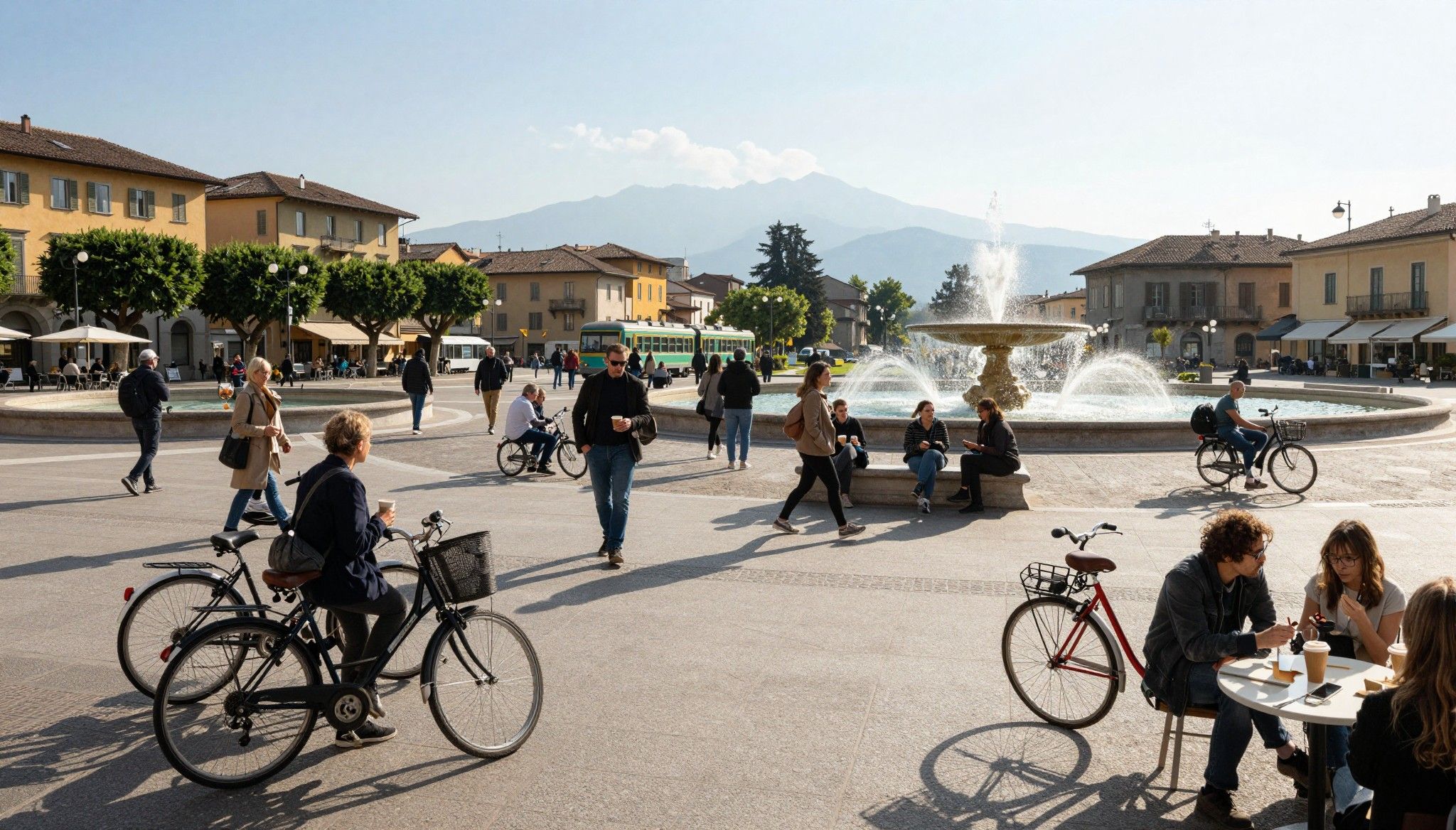
Imagine stepping out at dawn to a piazza where the barista knows your order, market stalls are already arranging chestnuts and citrus, and the train you catch to a regional town arrives on time. That is Italy in micro: lived-in streets, short supply of rental-grade flats, and daily rhythms that sustain local demand. Yet a common assumption among international buyers — that only Milan, Rome and the Amalfi coastline deliver reliable returns — misses a structural reality in Italy’s transport and housing map. Using national price data and infrastructure pipelines, this piece argues that well‑chosen “underconnected” towns can offer stronger yields, lower entry prices, and clearer upside than headline cities. (Sources: ISTAT house-price series; Nomisma market reports.)
Living the Italian lifestyle — beyond the headline cities

Italy’s day-to-day life is spatially diverse: a rental studio in Bologna looks and feels very different to a stone townhouse in Puglia. Price indexes show modest national growth since 2023, but experienced buyers know national averages hide large inter-regional spreads in price per square metre and rental demand. Local rhythms — weekly markets, university semesters, seasonal tourism — define occupancy patterns more than city-wide brand names. Understanding those rhythms is the first step to matching a lifestyle you love with a yield profile you can model.
Neighborhood spotlight: Bologna’s Santo Stefano vs. Rimini’s Marina Centro
Santo Stefano in Bologna trades proximity to universities and offices for steady long‑let demand from students and young professionals; units here rent predictably outside tourist seasons. By contrast, Marina Centro in Rimini surges in summer and falls back in winter — higher gross rents at peak but heavier vacancy risk outside July–August. For investors prioritising net yield, the stabilising presence of year-round employers and transport links matters more than coastal glamour.
Food, markets and daily life: how lifestyle shapes tenancy
Picture buying a two-bedroom above a neighbourhood market in Palermo or Modena: morning footfall, family renters who value local shops, and lower churn than tourist-heavy streets. Culinary reputation — think Parma’s prosciutto producers or Sicily’s citrus markets — supports mid-season tourism while anchoring local tenancy. For rental modelling, this means fewer void months and more predictable maintenance cycles compared with pure holiday lets.
Making the move: infrastructure, connectivity and where returns hide

Infrastructure is the hidden variable that re-prices Italian property. High‑speed rail, expanded regional services, and major cross‑border projects compress travel times and shift investor attention — but they also push prices ahead of realized rental growth. Nomisma’s regional analysis and Istat’s price series show recovery pockets in mid-sized markets where connectivity improvements are planned but not yet priced-in. The key is to separate projects that materially change commuting patterns from those that are politically prominent but locally immaterial.
Case study: Brenner Base Tunnel — winners and losers
The Brenner Base Tunnel will rewire north–south movement and freight logistics across the Alps. Regions near new or faster stations (Bolzano/Bozen, Fortezza/Franzensfeste) can expect sustained demand from logistics, tourism and commuter flows — but speculators often drive early price spikes. Meanwhile, towns that remain off the new fast‑line but benefit from improved regional feeders can offer lower entry prices and steadier rental yields as commuters redistribute. That makes a deliberate trade: buy immediate growth near a flagship station or target value‑growth in feeder towns where rents are less volatile.
- Buyers' checklist: connectivity factors that matter (not all projects are equal)
• Actual time‑savings to major employment centres (minutes saved, not promotional claims). • Frequency of service (hourly vs. multi‑hour gaps determines commuter viability). • Local employment anchors (hospitals, universities, logistics hubs) that sustain year‑round demand. • Planning certainty and funding — EU or state backing reduces political risk. • Current price gap to the primary city — a wider gap gives room for yield compression without full capital appreciation.
Insider knowledge: cultural reality, agency roles and common surprises
Expats often underestimate how Italian social patterns change tenancy risk. Long family stays, intergenerational occupancy and informal rental arrangements reduce churn but increase landlord diligence requirements. Notarized transaction data shows rising mortgage activity in 2024–25, signalling renewed buyer confidence; yet local due diligence must include historical neighbourhood vacancy rates and municipal planning restrictions that affect conversions and short‑let licences. Local agents who count municipal clerks and notarised-deeds experience are essential partners.
Working with an agency: what to insist on
1. Get an evidence pack: recent comparable rents, vacancy rates, and a 5‑year price history for the micro‑area. 2. Ask for transport modelling: typical commute times at peak and off‑peak, plus planned service changes. 3. Verify permits and building classification (A/1–A/5) and any heritage constraints that affect renovations. 4. Request a local maintenance cost schedule — older buildings often carry higher annual outlays than new builds. 5. Confirm short‑let legality if you plan hybrid use; municipal rules vary widely and fines compress returns.
Cultural integration: everyday practices that influence returns
Language, registration (residenza) practices and local networks shape tenancy quality. Tenants in provincial towns value relationships and reliability; a landlord who engages a trusted local caretaker or uses a resident agency often reduces late payments and complaint rates. For investors, investing time in a bilingual property manager and respecting seasonal tenancy patterns—holidays, summer closures, festa days—improves net yield and reduces legal friction.
Conclusion — love the lifestyle, buy the infrastructure profile. Italy offers vivid local life and micro-markets where everyday culture supports stable rents. But to convert that lifestyle into a dependable financial asset, prioritise measurable connectivity improvements, local economic anchors, and rigorous agency evidence packs. Start with a shortlist of towns within one hour of a major hub on reliable regional services, request time‑savings data not promises, and insist on notarised comparables before making an offer. Taste the espresso now; model the commute later.
Swedish financier who guided 150+ families to Spanish title deeds since relocating from Stockholm in 2012, focusing on legal and tax implications.