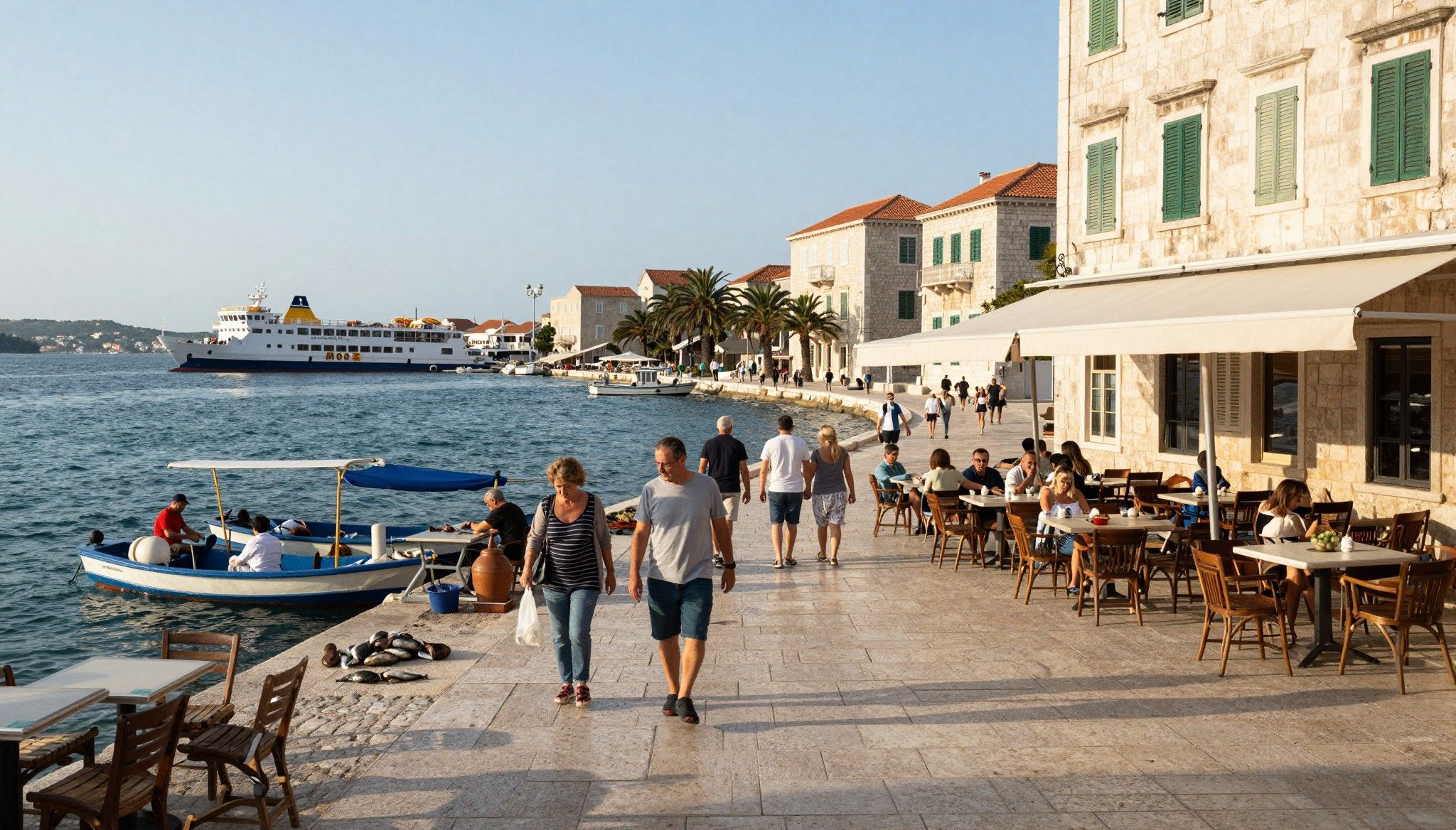
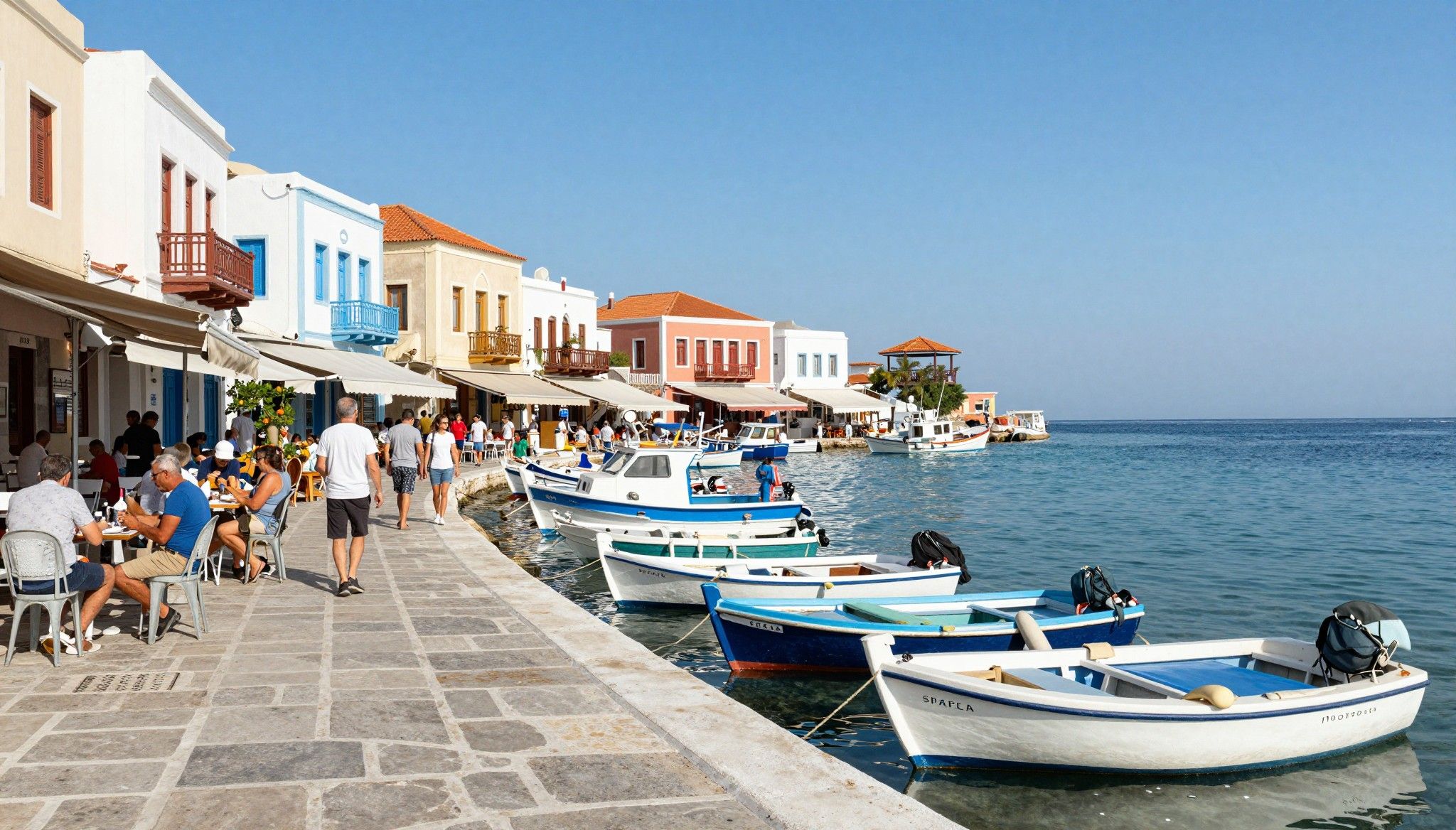
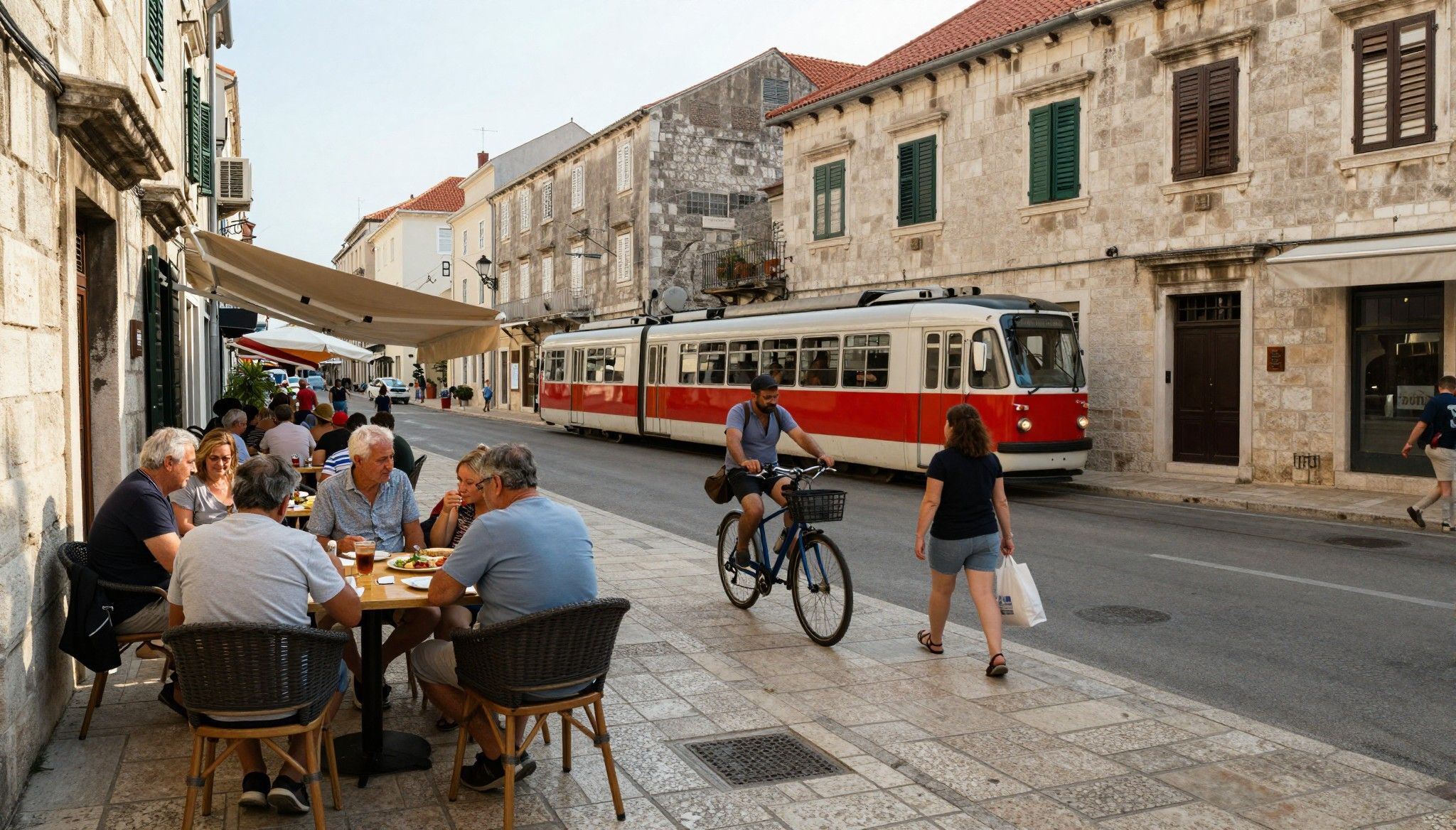
Imagine sipping espresso at Cavtat’s harbour at 9 a.m., the Adriatic glassy, fishermen haggling over squid, while two streets inland a freshly renovated stone apartment—vacant most of the winter—offers an investor a 5% net yield if rented year-round. That contrast—postcard prices on the seafront and pragmatic yields a little farther in—defines Croatia today.
Living the Croatia rhythm
Croatia moves at two tempos: the summer crescendo along the Dalmatian coast and a quieter, community-driven tempo inland and in Zagreb. Streets brim with markets by day and tavernas by night; cafes are meeting points for locals and expats alike. For buyers, this split matters—seasonal demand drives peak pricing on waterfronts while year-round rental demand anchors inner-city yields.
Riviera romance vs. practical pockets
Old stone streets of Hvar town, the fortified walls of Dubrovnik, and the pastel mansions of Rovinj create powerful price multipliers—they’re tourism magnets. Yet within 10–20 minutes’ walk from those sights you often find properties with lower price-per-m² and stronger long-term rental prospects. The trade is simple: pay a premium for postcard proximity or buy where yield is structurally supported.
Where locals live: Zagreb, Rijeka, continental gems
Zagreb’s neighbourhoods—Pantovčak’s quiet streets or the cafés around Tkalčićeva—sustain year-round rental demand from students, professionals, and diplomats. Inland towns and Kvarner (Rijeka, Opatija) balance tourism with local economies, offering steadier occupancy and often higher net yields than the highest-priced islands.
Making the move: practical considerations
Market data shows rapid asking‑price growth—flat prices per square metre rose noticeably in 2023–24—while tourism records keep demand high. Use official statistics and marketplace analyses to separate headline price growth from pockets where yields remain attractive. The aim is to identify micro‑markets where price momentum hasn’t outpaced achievable rents.
Property types and how they perform
Stone restorations on islands command high premiums and short‑season occupancy; modern apartments in regional centres deliver steadier 10–11 month occupancy. For investors focused on net yield, look for refurbished apartments with independent access, tidy utilities, and minimal maintenance exposure—these capture both long‑let demand and higher off‑season occupancy.
How local experts tilt the odds
A Croatian agent who knows municipal permit rhythms, seasonal demand curves, and which streets flood in winter reduces execution risk. Agencies that combine market data (average asking price per m², seasonal occupancy, typical management fees) with on‑the‑ground intelligence are worth a premium—because small local facts reprice yields fast.
- Practical steps to identify yield pockets
1. Map asking price per m² across municipalities; focus on places where rent-to-price ratios exceed 4% gross. 2. Cross‑check occupancy seasonality using eVisitor/tourism statistics for the past three years. 3. Inspect comparable long‑let listings (12+ month) to estimate achievable net rents. 4. Factor management and maintenance—use local quotes for realistic net yield scenarios.
Insider knowledge: what expats wish they’d known
Expats often romanticise coastal life and underestimate Croatia’s housing-pressure paradox: strong tourism inflates coastal prices while local wages remain comparatively low. The result is a market where international capital pushes prices faster than local incomes, creating both opportunity and social tension. Savvy buyers reconcile the dream with durable yield logic.
Language, community and day‑to‑day reality
Croatian is the daily language, but English works in cities and tourist towns. Joining local community groups—market cooperatives, sailing clubs, or winery associations—accelerates integration and reveals off‑market opportunities. Many expats say the single best step is to spend winters living like a local in the town you plan to buy in; seasonal taste tests reveal maintenance costs and true livability.
Long-term view: climate, infrastructure, and demand
Croatia’s record tourism (over 100 million overnight stays in recent years) supports long‑term demand but also invites regulation changes and accommodation reform. Track infrastructure investment—airport routes and ferry upgrades—because connectivity upgrades shift price bands and compress yields in previously affordable micro‑markets.
- Lifestyle and investment red flags • Extreme premium on waterfront listings with consistently low off‑season occupancy • Properties lacking proper permits for conversions or short‑lets • Streets prone to seasonal flooding or limited winter access • Listings with unrealistic projected rents that ignore management costs
Data snapshot: numbers to watch now Average asking price per m² for flats rose sharply in 2023–24; marketplace analyses report national averages in the €2,000–€3,500 range depending on region. Tourism platforms and eVisitor show yearly overnight stays above 100 million in recent reporting, reinforcing strong demand for coastal short‑lets. Use these headline figures to test any yield thesis against local comparables and seasonality. (Sources: Njuškalo market review; Croatian eVisitor/tourism reporting.)
- Due diligence checklist before offer 1. Verify municipal records and property permits. 2. Get three local management quotes to model net yield. 3. Run a 5‑year cash flow: conservative occupancy, conservative rent growth. 4. Confirm tax treatment with a Croatian tax advisor for incoming rental income and capital gains.
Conclusion: fall for Croatia, buy with the yield lens Croatia sells a life—sea‑sprayed mornings, markets that end in long lunches—but as an investor you must separate the postcard from the spreadsheet. Look beyond the waterfront, prioritise micro‑markets with year‑round demand, and use local data (asking‑price maps, eVisitor tourism figures) plus grounded agency expertise to secure net yields that withstand seasonality. Book a winter stay, audit local rent comparables, and ask an agent for three actual management quotes before your first offer.