When short‑term rules reprice Adriatic yields
EU short‑term rental rules and Croatia’s new Hospitality Act are shrinking the pool of legally listable holiday units — factor registration and compliance costs into net yield models.
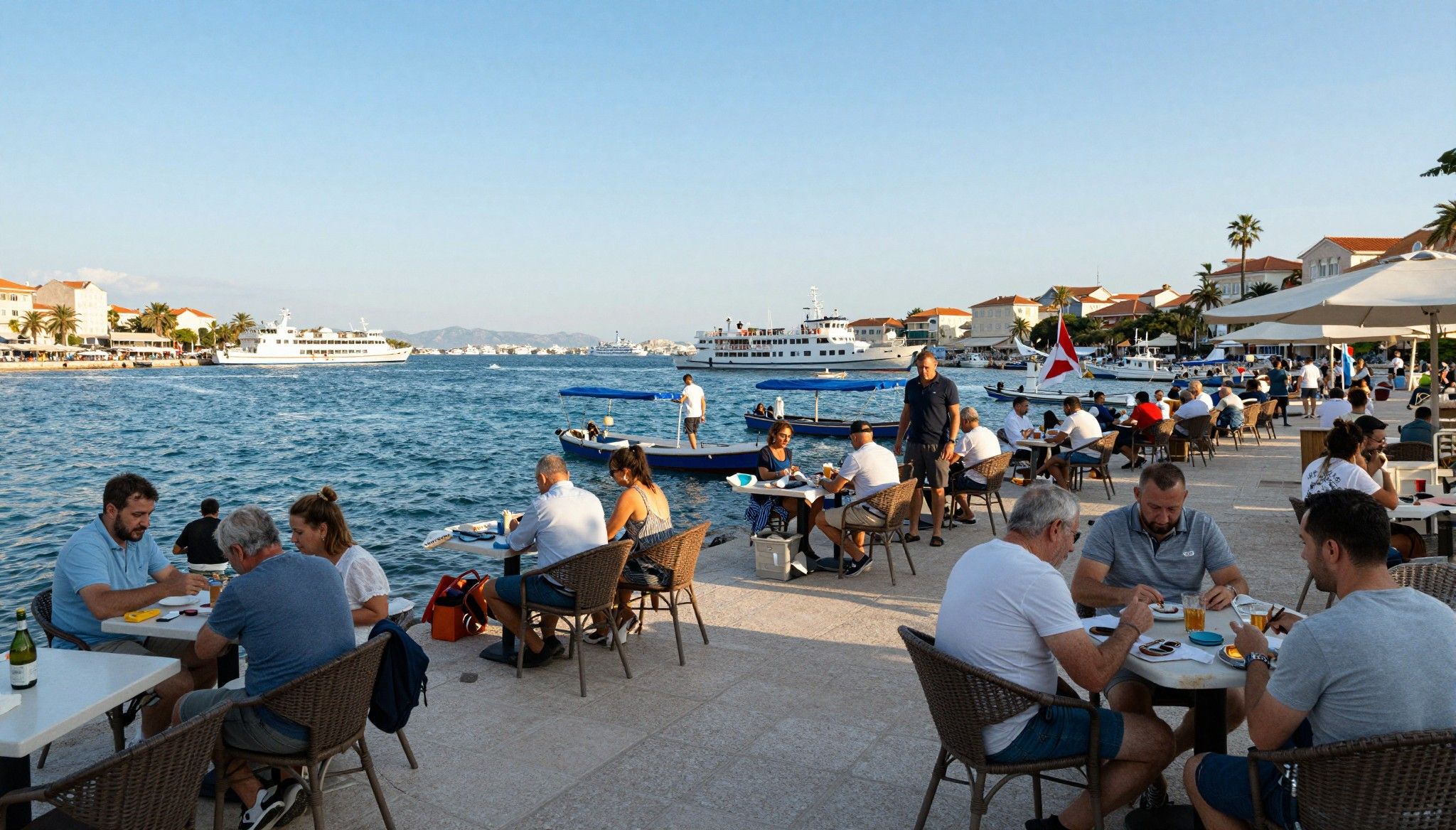
Imagine starting your morning in Rovinj with espresso at Café Bar Porto, then checking short‑term rental bookings on your phone while the old town wakes up — that split personality of tourism‑driven vibrancy and quiet, year‑round resident life is Croatia. For international buyers the romance is immediate: pebble beaches, stone houses with terraces, and compact historic centres that rent well in high season. But beneath those postcards lie regulatory shifts — EU rules, a new Croatian Hospitality Act and tightened short‑term rental registration — that can materially reprice net yields and operational risk. This guide marries the feel of life on the Adriatic with hard rules and numbers you need before a purchase.
Living the Croatia lifestyle
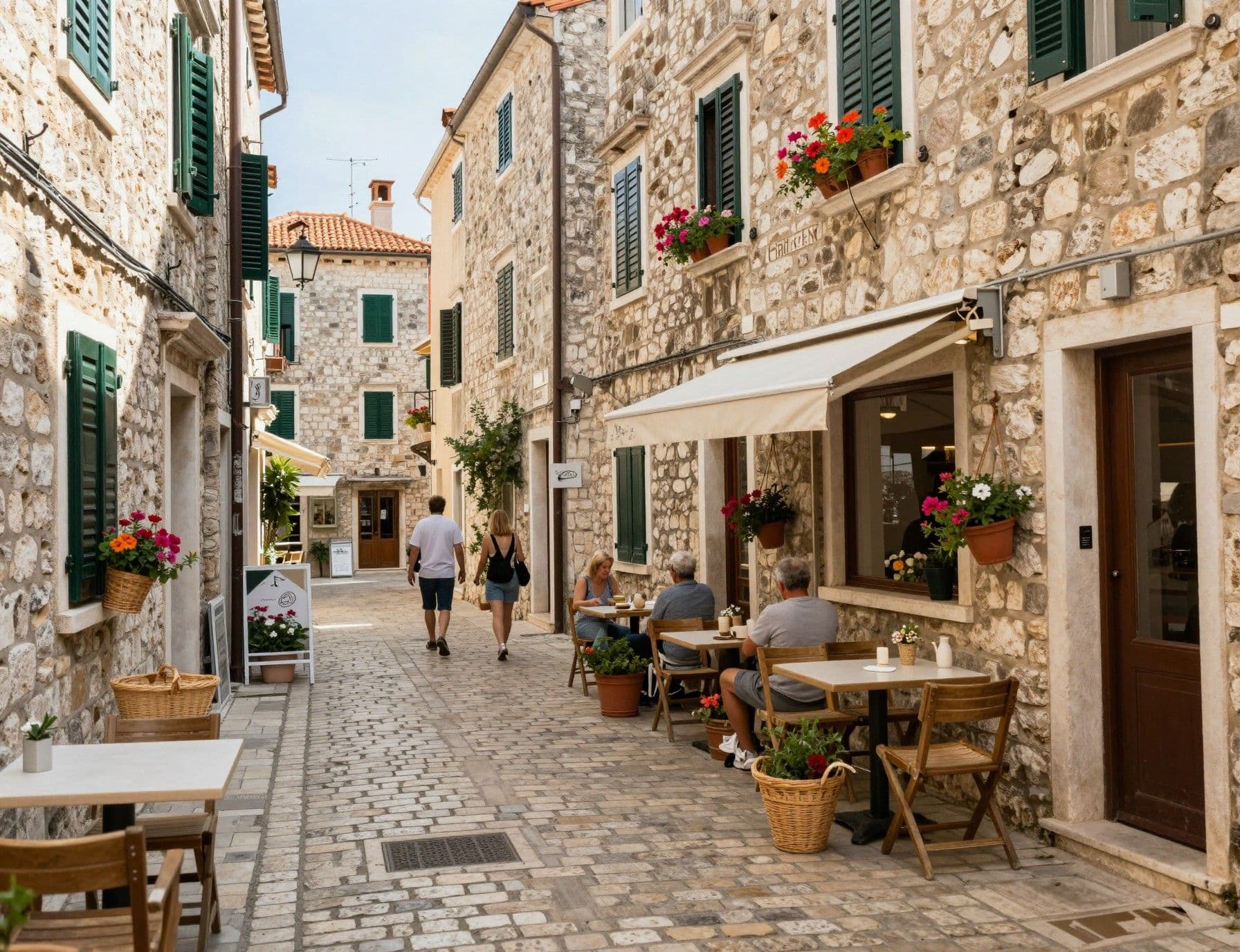
Croatia’s daily rhythm balances Mediterranean leisure with Central European order. Mornings are market‑driven — fish stalls in Split’s Pazar or Dolac’s produce in Zagreb — afternoons drift to beaches like Zlatni Rat or hidden coves around Vis, and evenings gather in piazzas over slow meals. For buyers this means properties that perform in concentrated seasons: compact seafront or old‑town flats command high nightly rates in July–August while inland locations show steadier year‑round demand. Expect service infrastructure to be seasonal: bakeries and ferries run at full tilt in summer and shrink back in winter, affecting short‑term occupancy and remote property management needs.
Adriatic hotspots vs inland life — how they feel
Walk the Riva in Split at 9am and you’ll hear multiple languages; buy a flat here and you underwrite tourist demand. Contrast that with Šibenik’s Tribunj or Varaždin’s quieter baroque streets, which reward long‑stay tenants and domestic renters. For investors, the difference is predictability: coastal assets can produce higher gross yields in summer but face vacancy and higher operating costs off‑season, while inland urban apartments trade at lower entry prices and often deliver steadier net yields through long‑term leases.
Food, markets and weekend life that sell the dream
Picture an afternoon at Split’s fish market, then a seaside aperitivo — these textures aren’t just lifestyle, they’re demand signals. Areas near consistent food and market life (Split’s Varoš, Dubrovnik’s Gruž port zones, Hvar town’s central streets) maintain stronger short‑term performance and attract premium bookings. But new registration rules and mandatory categorisation of rental units change who can legally list and how easily — a registration number will be required under EU Regulation 2024/1028 and Croatian implementing rules, which directly affects your ability to monetise a seaside flat. If the property can’t be registered, projected income models must be adjusted downward.
- Lifestyle highlights to map to investment behaviour
- Zagreb’s Upper Town cafés and proximity to international schools — steady long‑term rental demand
- Split’s Diocletian‑adjacent apartments — high season short‑term upside but regulatory scrutiny
- Istrian hill towns (Rovinj, Motovun) — year‑round lifestyle appeal, often better resale liquidity
- Islands (Hvar, Brač) — peak returns with higher management, access and off‑season vacancy costs
- Smaller continental towns (Osijek, Varaždin) — lower prices per m² and more predictable long‑stay tenants
Making the move: practical considerations where lifestyle meets regulation

Your romantic image of Croatia must be tested against three practical forces: who can legally buy which property, how the short‑term rental regulatory framework is evolving, and how prices have moved recently. National statistics show housing prices have risen strongly since 2016 and remain above European averages, compressing entry yields in the most desirable coastal towns. Meanwhile, access rules differ for EU and non‑EU buyers and small but important fiscal details — transfer tax, VAT on new builds, and tourist levies — will change net returns. Use recent government guidance and the national House Price Index to stress‑test yield projections.
Property styles and what they mean for income models
Stone historic flats in Dubrovnik or Split sell for location premium but typically offer small floorplates prone to renovation complexity and higher per‑m² costs. Newer developments near Zagreb provide larger units with modern energy efficiency and lower maintenance expense but weaker seasonal upside. For short‑term rental modelling include: local tourist levies, mandatory registration compliance costs, periodic re‑categorisation fees (as per the new Hospitality Act), and platform fees. These line items can erase 10–25% from headline gross yields depending on location and whether VAT applies.
Work with local experts who bridge lifestyle and compliance
Choose a lawyer and an agent who understand both the street‑level lifestyle draw and the paperwork: zoning, municipal tourist boards, and the eTourism registration system. Agencies familiar with island logistics, winterised property care and local tax offices add measurable value. Ask for prior client references that required registration numbers and reconciling VAT status — those experiences translate to fewer surprises at closing and enable realistic cash‑flow forecasts.
- Practical pre‑purchase steps blending lifestyle and legal certainty
- 1. Verify target property can obtain an eTourism registration number under EU Regulation 2024/1028 and Croatian implementing rules; if not, adjust income estimates.
- 2. Confirm buyer eligibility (EU vs non‑EU) for freehold ownership and whether any location is designated restricted for security reasons.
- 3. Model net yield after transfer tax (typically 3% on resale), VAT on new builds where applicable, tourist levies and platform commissions.
- 4. Require documented evidence of prior registration approvals from the local tourist board if short‑term income is a key part of the investment thesis.
Insider knowledge: regulatory changes that quietly reprice returns
Two regulatory themes are reshaping market economics. First, EU Regulation 2024/1028 introduces mandatory registration numbers for short‑term rental units and standardised data exchange across platforms; Croatia plans national implementation with an expected enforcement date in early 2027. Second, Croatia’s new Hospitality Act tightens categorisation and introduces re‑categorisation cycles and inspections. Together, these measures reduce the supply of legally marketable short‑term units and increase compliance costs — both factors that can push gross nightly rates up but compress net yields after compliance.
Timing and enforcement — what to expect
Croatia’s Ministry has confirmed the obligation to obtain a registration number will enter into force at the beginning of 2027 pending the new Hospitality Act. Practically, that gives buyers a policy runway: compliance planning, retrofitting properties for categorisation, and updating management contracts. But some municipalities are already increasing inspections and enforcement; buyers who ignore short‑term registration issues risk fines and forced de‑listing, which can turn a projected 6–8% gross yield into a 2–4% real yield overnight.
Market data that matters to yield projections
National house price indices and recent market reports show double‑digit annual growth in many coastal and urban micro‑markets through 2024–2025, compressing entry yields. The Croatian Bureau of Statistics and market analysts highlight that transaction volumes on the Adriatic have softened even while prices rise, a classic sign of supply‑demand imbalance that increases price volatility risk. For investors, prioritise cap rate realism: demand concentration, seasonal occupancy and new regulatory compliance must be built into sensitivity analyses.
- Regulatory red flags to spot during due diligence
- Property is in a municipality with restrictive local bylaws on short‑term rentals or where moratoria have been discussed.
- Seller cannot provide past registration numbers or proof of VAT status for a new build previously let commercially.
- Property requires extensive retrofitting to meet categorisation standards (safety, accessibility), adding material capex.
- Ambiguous cadastral or title records — unresolved land registry issues delay rental licensing.
How expats wish they’d prepared — lessons from owners
Experienced expat owners report three consistent mistakes: underestimating off‑season management costs, ignoring forthcoming registration obligations, and failing to confirm VAT exposure when buying new builds. Owners who budget 8–12% of gross rental revenue for multi‑year maintenance, registration compliance and municipal fees avoid painful surprises. Local managers who handle check‑in, emergency repairs and registration paperwork are often worth their commission in reduced vacancy and regulatory risk.
Conclusion: how to marry the Adriatic dream with an investor’s spreadsheet
Croatia offers a rare mix: daily life that feels small‑town Mediterranean and an investment market with clear yield levers. But the next three policy shifts — full implementation of EU Regulation 2024/1028, Croatia’s new Hospitality Act, and ongoing municipal-level short‑term rental rules — will reprice where and how yield is captured. Treat regulatory risk as an operating expense: verify registration eligibility, stress‑test net yields with compliance costs, and work with lawyers and agencies who can translate local cafés and markets into sustainable cash flows. If you do, you keep the lifestyle and protect the returns.
Swedish financier who guided 150+ families to Spanish title deeds since relocating from Stockholm in 2012, focusing on legal and tax implications.