Why France’s 'Expensive' Tag Masks Real Yield Pockets
France’s charm masks micro pockets of attractive yields; pair lifestyle choices with stress‑tested cash flows and local data to find defensible returns.
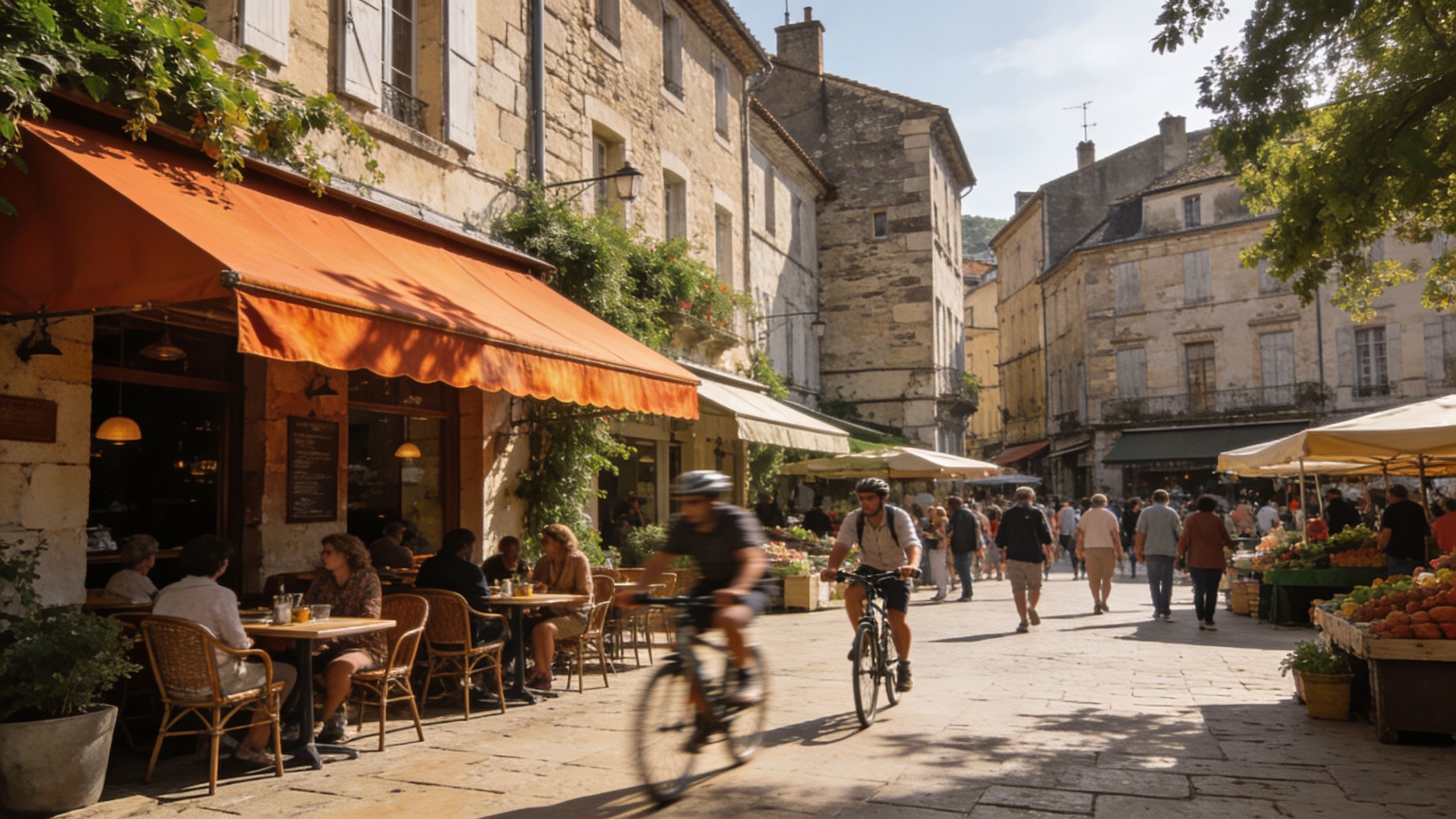
Imagine sipping a double espresso at a corner café on Rue Cler, then cycling past chestnut‑lined boulevards to a market overflowing with chèvre and cider. France still feels like that—textured, seasonal and stubbornly local—but beneath the postcard is a market that corrected, stabilised and now offers pockets where rental economics beat the headline price per square metre. Understanding which neighbourhoods hide durable rental yields requires looking at price cycles, local demand drivers and energy‑performance risks, not just tourism Instagram feeds. This guide pairs the romantic cues that make you fall in love with France and the stress‑tests investors need to judge real return.
Living the French Life — What actually feels like home

Daily life in France moves to local rhythms: weekday marché runs, long café conversations, and school‑run crowds that shape neighbourhood demand. In Paris, lanes around Canal Saint‑Martin hum with young professionals; in Bordeaux, weekly marché rhythms around Place de la Bourse draw families; and on the Riviera, small towns such as Antibes slow down outside July and August. For buyers, lifestyle decisions map directly to rental profiles: student districts produce high turnover but steady occupancy, family suburbs favour longer lets, and coastal towns show strong seasonal peaks. Treat lifestyle as demand segmentation — which tenant pool will your property serve most months of the year?
Paris pockets: beyond headline prices
Paris is not a single market: rent and price dispersion between arrondissements matters. Recent market reports show average Paris prices around €9–10k/m² while several arrondissements remain under €9k/m², creating entry points for yield‑focused buyers. Demand concentration in central arrondissements keeps scarcity premiums high, but peripheral arrondissements (13th, 19th, 20th) balance lower acquisition costs with strong rental demand from students and young professionals. Data‑minded buyers should compare local rent per m² to the purchase price per m² to estimate gross yield by micro‑neighbourhood rather than city average.
Coast and country: seasonality vs sustainable demand
Coastal markets like Nice and parts of the Côte d'Azur generate excellent short‑term rents in high season but produce volatile annual income unless matched with year‑round demand drivers such as business travel or second‑home owners renting off‑peak. Inland provincial cities—Nantes, Toulouse, Montpellier—show steadier yields, often above national averages because of student populations and local economies. On average, analysts estimate gross yields in French residential markets in the mid‑4% range, with city‑and product‑specific pockets exceeding 5–6% for correctly positioned small flats. For lifestyle buyers who plan to rent, match seasonality to your ownership cash‑flow needs rather than chasing headline charm.
Making the move: practical considerations that preserve yield

Dreams collide with paperwork: energy certificates, tenancy regimes, and local short‑let rules materially change net returns. France’s market corrected through 2023–24 and showed signs of stabilisation into 2025 per national indices; that makes timing less about panic and more about risk allocation. Before you sign, stress‑test scenarios for base rent decline, vacancy, and regulatory shocks — run a conservative case (‑10–15% rents), a central case, and a downside where occupancy falls sharply. Quantify the hit to net yield and check whether refinancing or rent‑indexation levers exist locally.
Property styles and their yield profiles
Studios and one‑bed flats in city centres often maximise gross yields but face higher management intensity, wear, and regulatory attention (short‑let caps, quality standards). Townhouses and village houses offer capital appreciation potential and appeal to long‑let families, but their turnover and maintenance costs blunt short‑term yields. New builds carry lower immediate capex and energy‑efficiency benefits, while older stone buildings may require renovation and DPE (energy performance) upgrades that affect mortgage approvals and rental eligibility. Match asset type to tenant profile: students and professionals for small flats, families for multi‑bed suburban units, holiday travellers for properly permitted coastal short‑lets.
Steps to stress‑test a French property (practical, ordered)
1) Collect local comparables: three recent sales and three realised rents within 300m and 12 months. 2) Build three cash‑flow scenarios: conservative (‑15% rent), central (0%), upside (+10% occupancy/rent). 3) Add realistic operating costs: 20–30% of gross for management, maintenance and taxes (adjust for long‑let vs short‑let). 4) Run energy‑upgrade capex: estimate DPE retrofit costs and their payback through higher rent or lower vacancy. 5) Check local short‑let rules and tourist classification before assuming summer income.
Insider knowledge: what expats wish they'd known
Expats usually talk about charm, yet underestimate the financial drag of small but recurring obligations: copropriété (co‑ownership) charges in Paris, local taxe foncière spikes, and mandatory DPE disclosures that can limit rental prospects for inefficient units. National statistics show price shifts from 2023 into 2025; buyers who assumed endless upside in 2022 were surprised. The quiet truth: solidity of French returns is less about glamour and more about granular management — street‑level comparables, accurate energy ratings, and a local agent who can translate lifestyle into tenancy demand.
Cultural integration and tenant expectations
French tenants expect clear rental protocols: fixed inventories (état des lieux), regular maintenance, and energy transparency. Language gaps slow negotiations and can inflate legal costs; hire a bilingual notaire or lawyer for contract clauses and deposit handling. For landlords, responding to neighbour committees and copro votes is part of ownership — communal consent affects alterations and rental permissions. Adopt local norms early: a well‑run building keeps vacancy low and yields steady.
Red flags to watch (on the ground)
Unusually high copro charges without recent renovations; energy class E/F/G without clear retrofit plan; properties listed primarily as short‑lets where local rules have tightened; neighbourhoods with declining population or school closures; listings with inconsistent rent comparables or unverifiable rental histories.
Where most buyers err is in mixing aspiration and finance: they buy the sea view but price a long‑let yield. Conversely, investors chase headline yields without tasting the neighbourhood — a mismatch that causes higher vacancy and unexpected capex. Successful buyers reconcile both: choose a neighbourhood that feeds the tenant pool you can reliably access and model downside scenarios conservatively. Use local data, verify with municipal sources, and retain an agent who provides verified rent rolls, not wishful comps.
France’s market has moved from rapid expansion to consolidation; INSEE and notaries’ indices document a correction through 2023–24 and a stabilisation into 2025, which reduces macro timing risk but raises the bar for micro due diligence. When you pair sensory understanding of a place — the morning marché, the Sunday boulangerie queue — with rigorous cash‑flow stress testing, you buy both lifestyle and a defensible investment. Start small: target neighbourhoods with verified rent per m² that support a conservative net yield, then scale where operations prove repeatable.
Conclusion — fall in love, but underwrite the romance
France rewards buyers who respect both taste and numbers. Begin with a lifestyle hypothesis — which neighbourhood will you love — then validate it with three rental scenarios, accurate local comparables and a clear retrofit plan for energy efficiency. Partner with a francophone notaire, an agent who supplies verified rent rolls, and a property manager who understands seasonal demand. That discipline turns a French idyll into a repeatable investment that fits a diversified portfolio.
Dutch investment strategist who built a practice assisting 200+ Dutch clients find Spanish assets, with emphasis on cap rates and due diligence.